Society
Kano Sets Up 20-Member Panel To Reform Almajiri Education

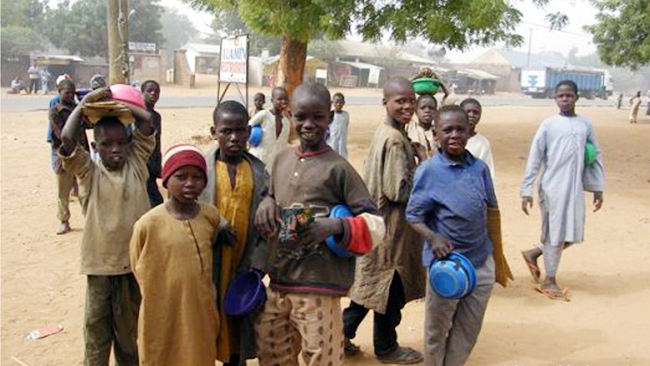
The Kano State Government has launched a fresh effort to reform the Almajiri education system with the establishment of a 20-member committee to review the operation and welfare of Tsangaya schools across the state.
The Advisory Committee on Almajiri Education and Welfare Reform will be responsible for developing measures to regulate and integrate the traditional Qur’anic education system into a broader framework that improves learning opportunities and protects children.
The committee is chaired by the state Attorney-General and Commissioner for Justice, Abdulkarim Kabir Maude, while Amina Yusuf-Yargaya, Permanent Secretary in the Ministry of Finance, will serve as secretary.
Musa Tanko-Muhammad, Press Secretary in the Office of the Secretary to the State Government, announced the constitution of the committee in a statement issued in Kano on Thursday.
The panel comprises representatives from government, traditional institutions, Islamic organisations, the legal and education sectors, as well as child-rights groups.
Its immediate responsibility is to examine the existing Tsangaya system and propose regulatory, integration and enforcement mechanisms for its reform.
The committee is also expected to produce a roadmap for pilot implementation, monitoring and long-term sustainability of the proposed changes.
Under the proposed framework, Qur’anic education would be combined with basic literacy and numeracy, vocational training and life skills, while retaining the religious and cultural values associated with the traditional system.
The committee will further recommend measures to strengthen child protection and prevent the exploitation of Almajiri children.
It is expected to develop a legal framework for the registration, licensing and supervision of Tsangaya schools, alongside recommendations on sustainable funding for the system.
The panel will also engage Qur’anic teachers, parents, Islamic scholars, traditional rulers and communities as part of efforts to ensure that the reforms reflect the realities of the system.
SSG Umar Faruk-Ibrahim expressed confidence that the experience and expertise of the committee members would contribute to improving the education and welfare of Almajiri children in Kano.
Faruk-Ibrahim stressed that the government’s initiative was not designed to abolish or weaken traditional Qur’anic education.
Rather, he said, the objective was to strengthen the system, safeguard children against abuse and exploitation and provide them with additional knowledge and practical skills needed to become productive members of society.



10 Years. ₦1.2bn. 40+ Tertiary Institutions by 2026. OPay Is Here to Stay

Access Holdings Extends Trading Dominance With Nearly 130 Million Shares

Nigeria reclaims Africa’s stock-market crown from Zimbabwe as FTSE return lifts sentiment

2027: Forget second term if US releases your documents – Primate Ayodele warns Tinubu

Nigeria draws the tax line between NGO and Business

Nigeria Builds Case for Credit Upgrade as Growth, Dollar Buffers Strengthen

Nigeria’s inflation shock is rewriting what consumers consider value

States’ revenue surges 221% after subsidy removal — report
-

 News2 days ago
10 Years. ₦1.2bn. 40+ Tertiary Institutions by 2026. OPay Is Here to Stay
- Finance2 days ago
Access Holdings Extends Trading Dominance With Nearly 130 Million Shares
- Business3 days ago
Nigeria reclaims Africa’s stock-market crown from Zimbabwe as FTSE return lifts sentiment
- Politics3 days ago
2027: Forget second term if US releases your documents – Primate Ayodele warns Tinubu