News
International Literacy Day: FG moves to boost fight against illiteracy, restores NMEC’s autonomy

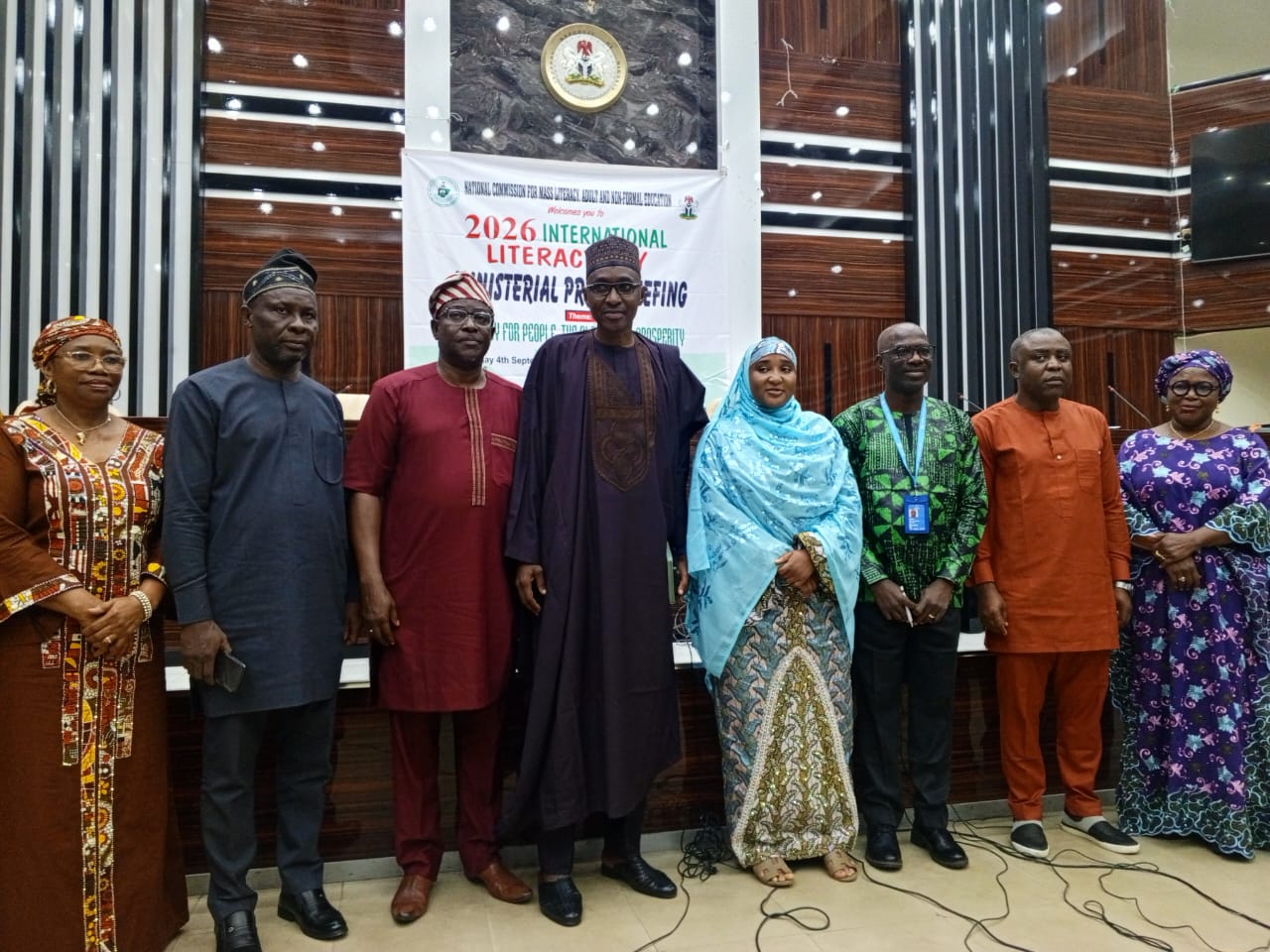

In order to boost the fight against illiteracy in the country, the Federal Ministry of Education has said it has restored full institutional autonomy to the National Commission for Mass Literacy, Adult and Non-Formal Education (NMEC).
Addressing journalists Friday in Abuja, in commemoration of the 2026 International Literacy Day, with the theme: “Literacy for people, the planet and prosperity,” Minister of State for Education, Prof. Suwaiba Ahmad, said the restoration of the Commission’s autonomy was a major step towards strengthening Nigeria’s mass literacy and non-formal education programmes.
Minister speaks on restoration of autonomy
The minister said the Federal Government was also expanding infrastructure for adult and non-formal education across the country, including the establishment of a new National Centre for Adult Education and plans for a permanent headquarters for NMEC.
She said community learning centres were also being activated, with NMEC staff expected to serve as instructors, particularly in communities where access to formal education remains limited.
According to her, the initiative would provide flexible learning opportunities for young people and adults who were unable to access or complete formal education.
She called for greater involvement of stakeholders outside government, saying the scale of youth and adult illiteracy required a collective response.
On progress towards Sustainable Development Goal 4, which focuses on quality and inclusive education, the minister expressed confidence that Nigeria was making significant progress.
“A major milestone in this effort is the full restoration of academic autonomy, a critical step for a healthy plan for education. For too long, the Commission has operated under significant constraints. We are now addressing these challenges head-on.
“This innovative approach addresses the perennial challenge of sustaining participatory students while expanding access to literacy opportunities. The centres will provide flexible, accessible pathways for young people and adults who miss out on formal education.
“I can assure you that we have gone very far in terms of achieving SDG 4. SDG 4 is not just about adult literacy, but about education generally. I can assure you we are very well on track,” she said.
Ahmad also assured that rural communities would not be excluded from government initiatives involving digital technology and artificial intelligence in teacher training.
“We are very conscious of that. We are ensuring that both rural and urban teachers, because of your location, are not at a disadvantage,” she said.
The minister further charged the new leadership of NMEC to be more proactive and inclusive in the discharge of its mandate.
While reiterating the Federal Government’s commitment to ending illiteracy, Ahmad said the administration would continue to expand access to inclusive, lifelong and non-formal education.
“You need to do more. You need to be more proactive. Ensure that whatever you do, you carry along every sector. Our mission is clear, to eradicate illiteracy and provide inclusive, lifelong, non-formal, and continuing education for sustainable development,” she said.
NMEC Executive Secretary speaks on data issues
Responding to questions, the newly appointed Executive Secretary of NMEC, Prof. Dahiru Muhammad Shuni, acknowledged the absence of current data on Nigeria’s literacy rate, saying the available figures dated back to 2010.
He described the situation as unacceptable and said relevant authorities were in the process of obtaining accurate and current data on the number of Nigerians affected by illiteracy.
“When I came in, the first thing I asked was to obtain the data. I was informed that the data available was obtained since 2010. That’s why I mandated my staff to get accurate data. Right now, our people are on the field getting the data,” he said.
UNESCO promises support
Also speaking, the Head of Education Sector at the UNESCO Abuja office, Mr. Oladeji Adeyemi, said global literacy had recorded significant improvement over the past decade but noted that millions of people were still affected by illiteracy.
Adeyemi said more than 88 per cent of the world’s population could now read and write, compared with about 65 per cent a decade ago.
He reaffirmed UNESCO’s commitment to working with Nigeria and other member states to promote literacy and education as drivers of sustainable development.
Adeyemi cited Kano State as an example of collaboration in advancing mass education, noting that UNESCO-supported programmes in the state had expanded beyond basic reading, writing and numeracy.
According to him, the programme had also incorporated education on health and well-being within family-life initiatives.
“Kano State is doing very well with regards to mass literacy, especially due to support from UNESCO. We’re on the right course and supporting the government for the education of Nigerians,” he said.











Access Holdings Extends Trading Dominance With Nearly 130 Million Shares

10 Years. ₦1.2bn. 40+ Tertiary Institutions by 2026. OPay Is Here to Stay

Police arrest five over alleged possession of human eyes in Bauchi

Insurance Stocks Sustain Rally as SUNU, Sovereign Record Back-to-Back Gains

Nigeria Builds Case for Credit Upgrade as Growth, Dollar Buffers Strengthen

Nigeria’s inflation shock is rewriting what consumers consider value

Northern youths threaten firm handling N525bn Kaduna-Abuja road over ‘assault’

NDC”s allegation of candidates substitution unfounded – INEC
-

 Finance2 days ago
Access Holdings Extends Trading Dominance With Nearly 130 Million Shares
- News2 days ago
10 Years. ₦1.2bn. 40+ Tertiary Institutions by 2026. OPay Is Here to Stay
- Politics3 days ago
Police arrest five over alleged possession of human eyes in Bauchi
- Finance2 days ago
Insurance Stocks Sustain Rally as SUNU, Sovereign Record Back-to-Back Gains