News
FCT residents groan under rising house rents, seek stronger regulation

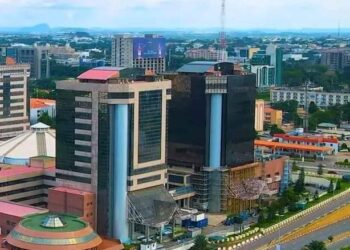
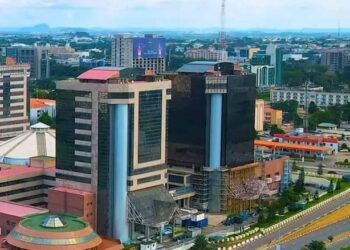
The housing crisis in Nigeria’s Federal Capital Territory (FCT) is becoming increasingly severe, with soaring rents, shortage of affordable housing, and rapid urbanisation, among others, making decent accommodation inaccessible to many residents, especially low and medium income earners, Blueprint.ng ’s findings have revealed.
Blueprint.ng correspondent’s checks indicate that civil servants, low-income earners, and small business owners are among those hardest hit by the shortage of affordable housing, as landlords continue to raise rents beyond the reach of average households in the absence of rent control laws.
In the last 20 years, with the growing population in the nation’s capital, many families in the FCT have been forced to relocate to the suburbs such as Kubwa, Lugbe, Karu, Nyanya, Gwagwalada, and Suleja in neighbouring Niger state as well as Mararaba and Masaka in Nasarawa state, as some go as far as Keffi, in search of affordable housing.
Blueprint.ngreports that every morning before dawn, thousands of workers leave these satellite towns for offices in Abuja metropolis.
Many spend between two to three hours daily commuting, not because they prefer it, but because living closer to work has become financially impossible.
Housing experts attribute the crisis to a combination of factors, including inflation, population growth, high cost of land, rising prices of building materials, inadequate mortgage financing, as well as a persistent housing deficit. Some residents have also blamed greed by property owners for the housing problems in the territory.
Our correspondent reports that tenants in buildings over two decades and more are not spared the trauma of incessant rent increment. This is notwithstanding the fact that most of the buildings have barely been renovated within the period forcing occupants to undertake repairs without guarantee of reimbursement.
It was also gathered that the situation has also led to overcrowding in many communities, traffic gridlocks and increased commuting costs, as well as the emergence of informal settlements, placing additional pressure on infrastructure and public services.
City becoming too expensive – Tenants
Interviews with tenants, estate agents and other stakeholders revealed a common pattern: annual rents have risen sharply, while landlords increasingly demand one or two years’ rent in advance, agency fees, legal fees and caution deposits.
Speaking to our correspondent, a tenant, Mrs Esther Onwuzulike, bemoaned the exorbitant rents, which according to her, were beyond the reach of the average residents, even outside the city centre.
Recounting her experience, Mrs Onwuzulike, who works with a government ministry, said she was previously staying in the Garki area but had to move to Karu, a suburb of Abuja, following a high rent.
For instance, the resident said, the rent on a one-bedroom flat she shares with her family was recently increased from N700, 000 to N1, 200,000.
“I am still pleading with my landlord to accept payment in two installments after my efforts to secure a more affordable accommodation failed. I went as far as Orozo, where most of the buildings lacked basic amenities like water and access roads. Security is also another issue. So moving out is not an option for me,” she said.
While commending the spate of infrastructure under the current dispensation which forced the rent up, she said:
“It will be good if the federal and state government can also direct attention to providing affordable housing instead of leaving it to all these developers interested only in their profit margin.
“There is so much land in the FCT that can be developed for low income earners. We are not finding it funny at all.”
…Estate managers, landlords blamed
Also, commenting on the development, a resident of Kubwa, another suburb of the FCT, blamed the rent hike on estate managers and agents, arguing that they drive the increment to receive high commissions when eventually paid.
Recounting his experience, Abubakar Habila, said he had been ejected from his rented apartment two times in the last four years, and may be facing the third one when his rent expires early next year.
Habila accused Abuja landlords of conspiring to ensure tenants pay 100% or more every two years on rent or move out because new tenants are better disposed to paying the new rent as well as the non-negotiable 10% agency fee and 10% legal fees.
This, he said, makes it lucrative for agents, notwithstanding the pains of the existing tenants.
…. ‘Problem beyond agents’
But a land speculator and agent who simply identified himself as Ahmeed, said inflation is the reason for the increment in rent.
“As a graduate of Polymer Science, it’s been impossible to get a job and I don’t have capital to start a business. So, this is how I survive. Yes, we make money but I don’t think any agent can influence a landlord to hike rent on property. However, for many of them it’s an investment and they have to be in touch with the trend. Inflation affects everything in this country.
“The situation may not improve until the government strengthens urban planning and enforces housing policies that promote inclusive development, ensuring that low and middle income earners are not priced out of the nation’s capital,” he declared.
…What the law says
Nigeria’s housing law has provisions defining tenants-landlord relation to the extent of regulating the eviction of tenants which is governed mainly by state tenancy laws and the Recovery of Premises laws applicable in different jurisdictions.
For the Federal Capital Territory (Abuja), recovery of premises is governed by the Recovery of Premises Act applicable to the FCT. However, there is no specific law that fixes a maximum percentage by which a landlord can increase rent or a fixed percentage cap on rent increase. For instance, “rent can only rise by 10% or 20%”.
Given the current housing pressure in Abuja, many tenants have called for stronger rent regulation, including limits on sudden and excessive increases.
Commenting on this, Habila said: “The housing crisis raises serious questions about the balance between property owners’ rights and tenants’ protection, especially where sudden rent hikes make housing unaffordable. There is a need for legislation against the practice of arbitrarily increasing rent.”
“In my case, I paid rent of N2 million with N200,000 agency fee, N200,000 legal fee, and after two years my landlord wants to increase my rent by 100% because he said that is the going rate for that sort of apartment now. Where do I get such money from? Are we not indirectly encouraging corruption,” he queried?
…Mystery of empty estates
In the midst of all this, Blueprint observes a worrisome trend of empty estates and blocks of buildings scattered all over Abuja upscale districts.
Several of these beautifully finished apartments, our correspondent reports, remain locked for months and even years.
Housing experts have attributed this to speculative investment, where property are treated primarily as stores of wealth rather than homes, with recent recoveries by Nigeria’s anti-graft agencies running to 100s of houses lending credence to this perspective.
Blueprint’s investigation revealed that while tenement rate which is largely disputed, ground rent, land use and other charges like land administration, building approvals, documentation and development levies are in place. Taxation, however, is not harmonised, hence the difficulty in identifying property owners.
…Retired FCDA staff
Speaking to Blueprint.ng, a retired staff of Federal Capital Development Authority (FCDA), which is responsible for planning, design and development of the FCT, Beatrice Ajuma, said “Empty estates and building is a major issue in Abuja housing shortage because the vacant property can contribute to the shortages, insecurity and loss of revenue. Identifying ownership could reveal whether the problem is lack of housing or underutilisation of existing housing stock.
“Every legally allocated plot of land in Abuja has a record of the allotee or current owner. Government can conduct a comprehensive city-wide property audit to determine owners of these abandoned buildings and establish a reliable property registry linked with taxation, possibly through a single annual property tax.”
…Challenges accessing housing programmes
Blueprint.ng correspondent’s checks indicated that the federal government is addressing housing deficits estimated at over 20 million units through targeted interventions, including the Renewed Hope Cities and Estates programmes, the NSHP Social Housing initiative delivering mass units across 774 Local Government Areas, land administration reforms, and low-interest mortgages via the Federal Mortgage Bank of Nigeria.
However, some of our respondents raised issues regarding accessibility of these programmes.
For instance, Mrs Chinasa Chukwudi, said she tried without success, to register for the federal government housing programme by accessing the Renewed Hope Housing Application online portal where requirements listed include a verifiable means of identification, and a non-refundable application fee of N10, 000.
Upon filling in the necessary details, she expressed worry that notwithstanding her N250, 000 monthly earning, the response was: “Sorry, you do not qualify at this time, apply next time.
“I was surprised that though I earn like four times the federal government’s minimum wage I was bounced. So are the houses only for the elite and civil servants since I am in the private sector?”
Also, speaking with Blueprint.ng, an FCT resident, whose application was also denied noted: “There is need for improved information on the scheme, particularly, as it concerns eligibility on and off the website so we don’t raise our hopes only for it be dashed.”
…Way out
As a way out of the identified multiple challenge, housing experts and stakeholders recommend “expanding mortgage financing, simplifying land administration, investing in transport and infrastructure in satellite towns, encouraging mixed-income housing developments and reviewing policies that unintentionally favour speculative investment over affordable housing.”
They also called on the FCT Administration to, among others, accelerate affordable housing programmes, improve access to mortgage financing, review land allocation processes, and encourage private-sector investment through incentives that reduce the cost of housing development.



FG targeting 6,500MW of power supply by December, says Tegbe

ADC challenges Tinubu to clarify ‘all is fair in politics’ remark

Oluwo urges Tinubu to grant Nnamdi Kanu presidential amnesty

‘Win With Tinubu’ team to meet Ododo, targets 239 wards in Kogi

President Tinubu condemns mass abduction in Niger state, orders immediate rescue operation

MTN Nigeria emerges as key driver of Group’s first half 2026 growth

BBNaija: Biggie gives Flora secret mission to make Aikou fall in love

Strong demand pushes one-year T-bills rate lower to 17.15%
-

 Breaking2 days ago
FG targeting 6,500MW of power supply by December, says Tegbe
- Politics3 days ago
ADC challenges Tinubu to clarify ‘all is fair in politics’ remark
- News3 days ago
Oluwo urges Tinubu to grant Nnamdi Kanu presidential amnesty
- News2 days ago
‘Win With Tinubu’ team to meet Ododo, targets 239 wards in Kogi