News
Claims of over N8trn extra-budgetary spending by FG false – Minister

The federal government has denied claims making the rounds that it spent over N8 trillion outside the approved 2026 budget, declaring that it does not operate any “shadow budget” or violate the country’s constitutional framework for public finance.
The government’s clarification follows intense public debate over recent commentary alleging that approximately two percent of Nigeria’s Gross Domestic Product (GDP)—amounting to over N8 trillion—was expended without legislative approval, drawing references to the International Monetary Fund (IMF) Representative in Nigeria and the Fund’s 2026 Article IV Consultation Report.
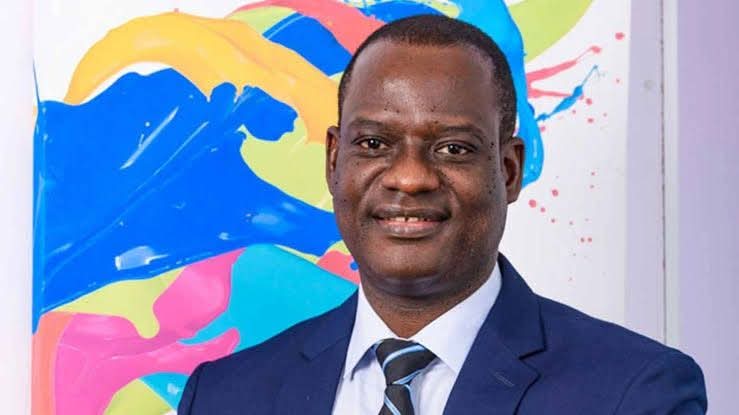
In a comprehensive statement personally signed by the Minister of Finance and Coordinating Minister of the Economy, Mr. Taiwo Oyedele, the government described the claims as “incorrect” and warned that they “risk misleading the public regarding the government’s financial management.”
‘No expenditure outside the law’
Oyedele asserted that every single kobo spent by the current administration aligns strictly with Sections 80 to 83 and Section 162 of the 1999 Constitution of the Federal Republic of Nigeria (as amended), which mandate that public funds only be withdrawn via laws enacted by the National Assembly.
The finance minister noted that those alleging secret spending of trillions of naira should provide verifiable facts rather than relying on conjecture.
He said: “For the avoidance of doubt, the Federal Government does not operate a ‘shadow budget’ or expend public funds outside the constitutional and statutory framework established for public finance.
“Federal Government expenditure is incurred pursuant to duly enacted Appropriation Acts, Supplementary Appropriation Acts, and other statutory authorities enacted by the National Assembly.”
He explained that multi-year capital projects, which naturally span across multiple fiscal cycles, utilise approved provisions for capital rollovers. According to him, these are standard practices globally and should not be misconstrued as illegal spending.
Explains the N8trn figure
Educating the public on the structure of Nigeria’s public finances, the minister explained that the N8 trillion figure being weaponised by commentators actually represents statutory transfers, first-line charges, and legal intervention mechanisms.
These legal expenditures include: Statutory allocations to development commissions and agencies; Cost of collection and administration legally retained by revenue-generating bodies (like the FIRS and Nigeria Customs); Separate budgets approved by parliament for specific agencies and the Federal Capital Territory (FCT); Special legal interventions for national emergencies, security, and critical infrastructure; and Authorized debt service obligations.
“These expenditures are neither secret nor illegal. Their treatment for reporting purposes may differ from their presentation in the annual Appropriation Act, particularly under international statistical and reporting standards. Such classification differences should not be misrepresented as evidence of unlawful expenditure,” Oyedele further stated.
He further dismissed fears that the money had widened the nation’s fiscal deficit, stating that “funding projects through statutory transfers or lawful financing mechanisms does not, on its own, increase the deficit.”
‘IMF focus on reporting, not legality’
The administration pointed out that the IMF’s observation was directed at the timing, presentation, and comprehensiveness of Nigeria’s fiscal reporting, rather than the legality of the transactions.
Oyedele reminded critics that the administration was already working to cure the issue of overlapping budgets.
He recalled that President Bola Ahmed Tinubu had explicitly championed this reform during his presentation of the 2026 Appropriation Bill to the National Assembly late last year.
“His Excellency, President Bola Ahmed Tinubu, had himself formally requested the National Assembly to end the practice of running multiple and overlapping budgets, and rather harmonise into a single, cohesive framework during his presentation of the 2026 Appropriation Bill to a joint session of the National Assembly on December 19, 2025,” Oyedele said.
Reiterating the government’s stance on transparency, the minister concluded by welcoming public debate but urged citizens and analysts to anchor discussions on facts.
He assured that the Tinubu administration remains fully committed to its ongoing financial reforms, which, according to him, already won praise from international rating agencies and multilateral institutions alike.



FG targeting 6,500MW of power supply by December, says Tegbe

‘Win With Tinubu’ team to meet Ododo, targets 239 wards in Kogi

President Tinubu condemns mass abduction in Niger state, orders immediate rescue operation

BBNaija: Biggie gives Flora secret mission to make Aikou fall in love

MTN Nigeria emerges as key driver of Group’s first half 2026 growth

Strong demand pushes one-year T-bills rate lower to 17.15%

Stand by your vote, don’t be intimidated – PDP urges Ogun residents ahead of polls

CAPPA files FOI request on national tobacco control bill
-

 Breaking3 days ago
FG targeting 6,500MW of power supply by December, says Tegbe
- News3 days ago
‘Win With Tinubu’ team to meet Ododo, targets 239 wards in Kogi
- Special Reports3 days ago
President Tinubu condemns mass abduction in Niger state, orders immediate rescue operation
- Breaking3 days ago
BBNaija: Biggie gives Flora secret mission to make Aikou fall in love