Society
CJN Warns Judges Against Rushing Cases Over Heavy Workload

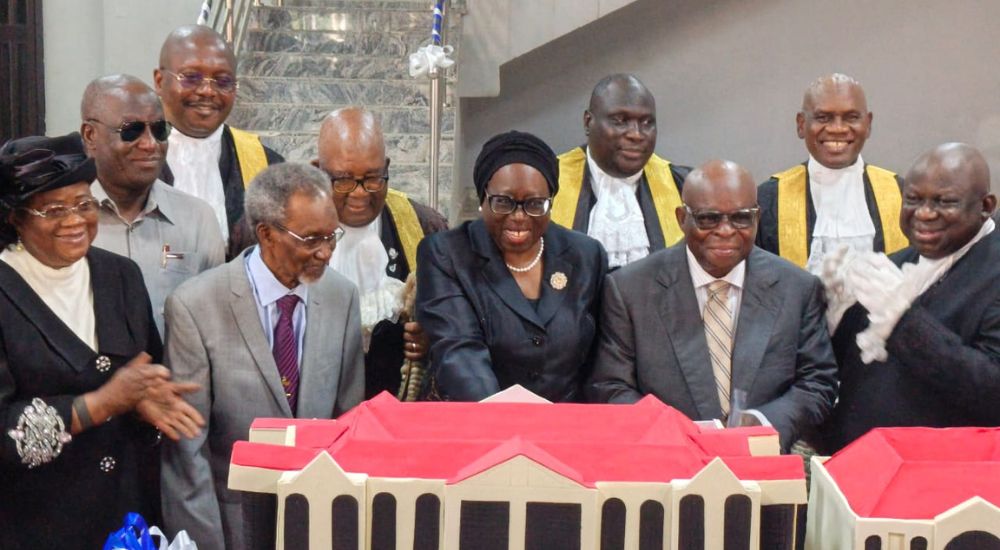
The Chief Justice of Nigeria (CJN), Justice Kudirat Kekere-Ekun, has warned judges across the country against allowing heavy caseloads to result in impatience, discourtesy or inadequate attention to cases before them.
Kekere-Ekun issued the warning on Wednesday at the 2026/2027 Legal Year Ceremony of the National Industrial Court of Nigeria (NICN) in Abuja, stressing that every case before a court involves real people, businesses and livelihoods.
She said the pressure arising from a large volume of cases could not excuse judges from carefully and fairly considering matters brought before them.
“The volume of cases before a court can be demanding but pressure must never become an excuse for impatience, discourtesy or inadequate attention to the matters placed before the court.
“Every case represents real people, real businesses, real livelihoods and, sometimes, circumstances of considerable personal hardship.
“The parties may not always obtain the outcome they seek but they are entitled to know that their cases have been heard carefully, fairly and impartially,” the CJN said.
The ceremony coincided with the commissioning of the NICN headquarters in Area 3, Abuja.
The CJN described judicial office as both a privilege and a profound responsibility, urging judges to approach their duties with diligence, patience and intellectual discipline.
She said public confidence in the judiciary depended not only on the decisions delivered by judges but also on how proceedings were conducted.
“Every judge must remain conscious that the authority of the court is derived from the constitution and the law, and that the confidence which the public places in the judiciary must be earned afresh every day.
“The manner in which a judge conducts proceedings, listens to parties, treats counsel and staff, and ultimately gives reasons for a decision is as important to public confidence as the decision itself,” she said.
Kekere-Ekun also urged judges of the specialised industrial court to keep pace with emerging developments in labour and employment law as changes in the workplace continue to generate new legal questions.
She cited the growth of digital platforms, remote working arrangements and workplace technologies as developments likely to create novel disputes between employers and workers.
“The workplace is changing rapidly. New forms of employment, digital platforms, remote working arrangements, workplace technologies and evolving understandings of the rights and obligations of employers and workers will continue to present novel questions for adjudication.
“The court must remain intellectually prepared to meet these challenges, while ensuring that its decisions remain firmly anchored in the constitution, applicable legislation, binding precedent and established principles of judicial reasoning,” she said.
The Attorney-General of the Federation (AGF), Lateef Fagbemi, SAN, said the commissioning of the new NICN headquarters represented more than an expansion of physical infrastructure.
Fagbemi, who was represented at the ceremony, said the development was also part of efforts to strengthen the institution with the structures, systems and professional culture required to handle its growing judicial responsibilities.
He said judicial leadership should ultimately be assessed by the quality of justice administered and the jurisprudence developed by the courts.
The President of the NICN, Justice Benedict Kanyip, described the court as a critical institution for resolving disputes involving workplace rights and obligations.
Kanyip said the court was entrusted with the responsibility of administering labour justice in accordance with the law and must remain impartial in all circumstances.
“As an institution for labour justice, we are expected to remain impartial in all circumstances.
“For this reason, judicial independence, which applies to all courts, remains fundamental to the effective dispensation of labour justice,” he said.
He, however, acknowledged that judicial independence comes with significant responsibility.
“We recognise, however, that as sacred as it is, judicial independence comes with enormous responsibility,” Kanyip said.



SERAP Urges Tinubu To Order Probe Into Alleged ₦94.4bn Oil Fund Irregularities

TikTok influencer Kholegrams faces backlash after asking fans to pay ₦100,000 to hang out with her

Dollar to Naira: Naira holds steady as official rate trades at ₦1,327.08

HK boss denies maltreating man, explains why he sold his phone for ₦90,000

2027: Ondo APC constitutes presidential campaign council, nominates Aiyedatiwa chairman

Five arrested for destroying President Tinubu and Governor Yusuf’s posters, billboards in Kano

Rivers police bust six-man kidnap syndicate, arrest two suspects

Iran president says talks with US is ‘meaningless’
-

 News3 days ago
SERAP Urges Tinubu To Order Probe Into Alleged ₦94.4bn Oil Fund Irregularities
- Special Reports2 days ago
TikTok influencer Kholegrams faces backlash after asking fans to pay ₦100,000 to hang out with her
- Special Reports2 days ago
Dollar to Naira: Naira holds steady as official rate trades at ₦1,327.08
- Special Reports2 days ago
HK boss denies maltreating man, explains why he sold his phone for ₦90,000