Top Stories
Check Out The World’s Most Isolated Tribes and Why Contact With Them Is Forbidden

Deep in the Amazon rainforest along the border of Peru and Brazil lives one of the most isolated groups on Earth: the Mashco Piro. Researchers believe they are the world’s largest uncontacted tribe, with estimates ranging from several hundred to more than 1,000 people.
The Mashco Piro are an Indigenous group that has chosen to avoid sustained contact with the outside world. They are part of the larger Piro-speaking family, but have remained in voluntary isolation for generations.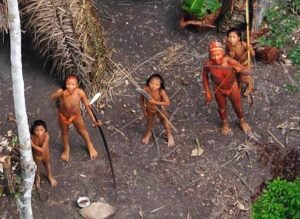
Sightings have increased in recent years, often along rivers in Peru’s Madre de Dios region. The group is usually seen in small family units, using traditional tools, canoes, and bows. They do not speak Spanish and have little to no immunity to common outside illnesses.
Anthropologists say the Mashco Piro’s isolation is a direct response to history. In the late 19th and early 20th centuries, rubber extraction in the Amazon brought violence, forced labor, and disease to Indigenous communities. Groups that could not retreat faced collapse.
To avoid a repeat, the Mashco Piro have maintained distance from loggers, miners, missionaries, and even other Indigenous communities that are in contact with the state.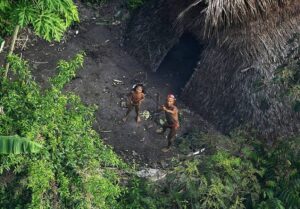
Because contact can be deadly, the Peruvian government has enacted strict laws to protect uncontacted peoples.
Key protections include:
1. Territorial Reserves: Large areas of forest are legally designated as reserves where entry is banned without explicit state authorization. The Mashco Piro’s territory falls within these protected zones.
2. No Contact Policy: Unauthorized entry, missionary activity, or attempts to approach the group are illegal. The policy is based on evidence that respiratory infections, influenza, and other diseases can be fatal to populations with no prior exposure.
3. Monitoring, Not Intervention: State agencies and Indigenous organizations monitor the reserves using remote observation to document presence, movement, and threats like illegal logging, without attempting to make contact.
Violating these rules can lead to criminal charges, and authorities have intervened to stop illegal incursions.
The biggest risks to the Mashco Piro today are external. Illegal logging, gold mining, and land invasions push into their territory, bringing noise, pollution, and people who may carry disease. Climate pressures and reduced game also affect their food sources.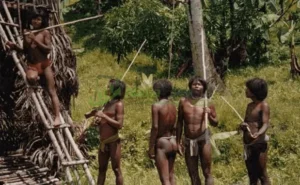
Indigenous rights groups argue that protecting their land is the most effective way to protect their lives. “The best protection is to keep outsiders out,” said one Amazon-based advocate.
The Mashco Piro are a reminder that uncontacted does not mean “unknown” or “unprotected.” They are a living society with the right to self-determination. Peru’s legal framework treats isolation as a form of protection, not abandonment....



FG targeting 6,500MW of power supply by December, says Tegbe

ADC challenges Tinubu to clarify ‘all is fair in politics’ remark

Oluwo urges Tinubu to grant Nnamdi Kanu presidential amnesty

MTN Nigeria emerges as key driver of Group’s first half 2026 growth

BBNaija: Biggie gives Flora secret mission to make Aikou fall in love

‘Win With Tinubu’ team to meet Ododo, targets 239 wards in Kogi

President Tinubu condemns mass abduction in Niger state, orders immediate rescue operation

Malami Inaugurates 600-Member ADC Campaign Council in Kebbi
-

 Breaking2 days ago
FG targeting 6,500MW of power supply by December, says Tegbe
- Politics3 days ago
ADC challenges Tinubu to clarify ‘all is fair in politics’ remark
- News3 days ago
Oluwo urges Tinubu to grant Nnamdi Kanu presidential amnesty
- News2 days ago
MTN Nigeria emerges as key driver of Group’s first half 2026 growth