World News
'Very high risk' Ebola strain causes chaos as worldwide outbreak warning issued


The World Health Organization (WHO) has cautioned that the dangers presented by a rare Ebola strain remain “very high” and that transmission is connected to multiple contributing factors.
Although the lethal Bundibugyo strain appears to have been contained in Uganda, the deadly virus continues to spread throughout neighboring DR Congo, which is simultaneously grappling with widespread instability stemming from clashes between the national army and rebel groups.
According to WHO: “The risk in the Democratic Republic of the Congo remains assessed as very high due to ongoing transmission and the continued expansion of the outbreak into new health zones, increasing the potential for further national and regional spread, reports Daily Star.
Numerous factors are fueling the ongoing transmission of the Bundibugyo strain, but WHO officials have identified the regional conflict as a primary driver of the problem.
The health organization notes that forced population displacement to escape violence, combined with disrupted food and clean water supplies, have all played a role in facilitating spread.
A WHO report stated: “The outbreak continues in a complex humanitarian and conflict-affected environment, characterized by highly mobile and often displaced populations, many of whom have limited access to basic services, including food, clean water, shelter, health care and protection.”
The report further noted that ongoing conflict and instability are hindering healthcare workers from reaching those in need, while densely populated camps are accelerating the virus’s spread.
The report states: “These conditions increase the risk of transmission, particularly in overcrowded sites for internally displaced people. Security incidents affecting health facilities have created additional operational challenges… including restricted access for response teams, disruption of surveillance and response activities and an increased risk of undetected transmission.”
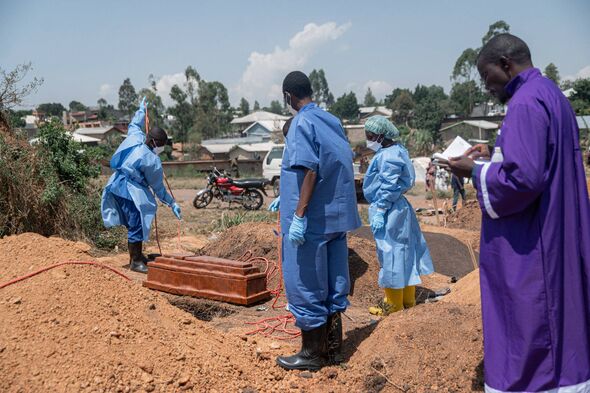
The WHO also cautioned that contributing factors include inadequately equipped hospitals and the improper burial of victims.
DON’T MISS:
The report states: “These conditions increase the risk of transmission, particularly in overcrowded sites for internally displaced people. Security incidents affecting health facilities have created additional operational challenges… including restricted access for response teams, disruption of surveillance and response activities and an increased risk of undetected transmission.”
The WHO also cautioned that contributing factors include inadequately equipped hospitals and the improper burial of victims.
The WHO stated: “Transmission is particularly amplified in health-care settings when IPC measures are inadequate and during unsafe burial practices involving direct contact with deceased persons.”
The report also attributed elevated infection rates to a rise in testing, noting: “Rapid recognition of cases, testing and optimized supportive care can reduce mortality, and improve community perceptions and acceptance of health care within the response.”












Zenith Bank Charts New Path to Scale Nigeria’s $6.1bn Non-Oil Export Market

FG targeting 6,500MW of power supply by December, says Tegbe

Ogun 2027: ‘APC can’t suspend me after taking N50m’ – Hunye

ADC challenges Tinubu to clarify ‘all is fair in politics’ remark

Oluwo urges Tinubu to grant Nnamdi Kanu presidential amnesty

MTN Nigeria emerges as key driver of Group’s first half 2026 growth

Security guard shot dead in suspected cult attack at Lagos estate

Dangote raises petrol price despite crude oil decline
-

 Finance3 days ago
Zenith Bank Charts New Path to Scale Nigeria’s $6.1bn Non-Oil Export Market
- Breaking2 days ago
FG targeting 6,500MW of power supply by December, says Tegbe
- Politics3 days ago
Ogun 2027: ‘APC can’t suspend me after taking N50m’ – Hunye
- Politics2 days ago
ADC challenges Tinubu to clarify ‘all is fair in politics’ remark