World News
US And Saudi Arabia Sign Landmark Nuclear Deal: 5 Big Questions Answered

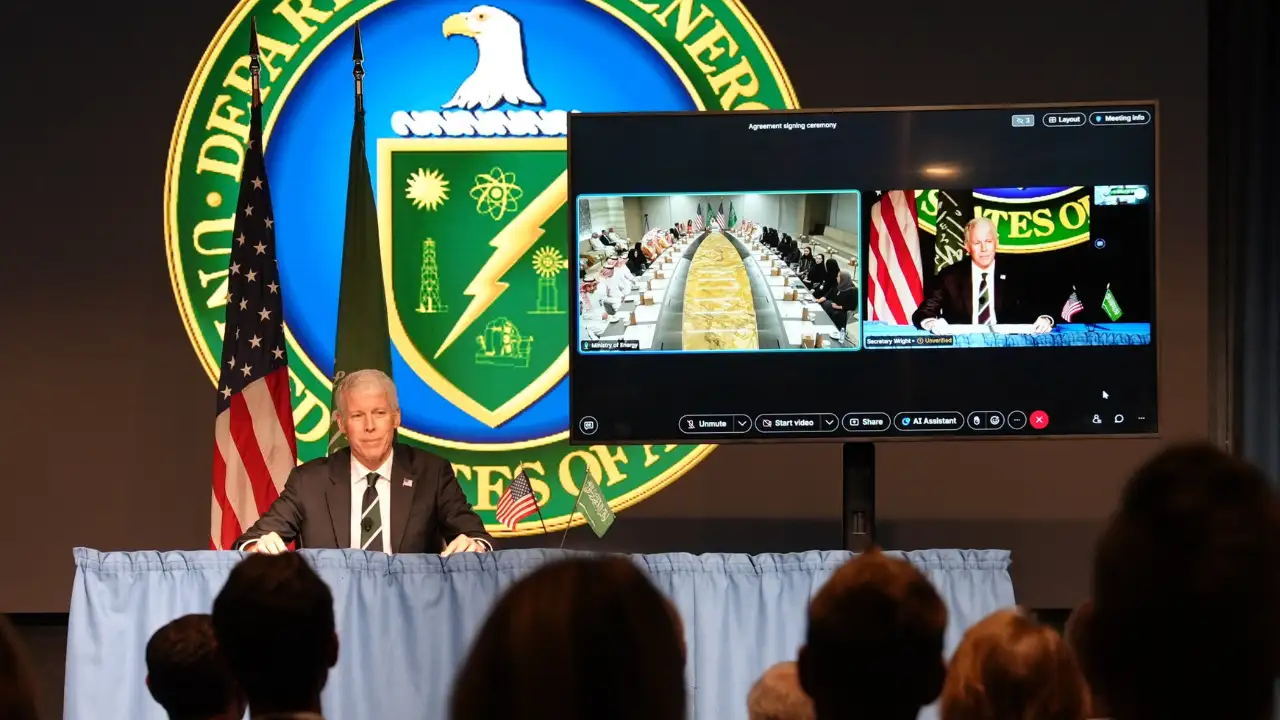
The United States and Saudi Arabia have signed a civilian nuclear cooperation agreement that will now go before Congress for review.
The United States and Saudi Arabia have signed a major civilian nuclear cooperation agreement, which is known as a 123 agreement along with a bilateral safeguards agreement. The agreements were signed by US Energy Secretary Chris Wright and Saudi Energy Minister Prince Abdulaziz bin Salman.
According to the US Department of Energy, the agreements create the legal framework for long-term peaceful nuclear cooperation, while promoting nuclear safety, security and nonproliferation. The deal, expected to last for decades and be worth billions of dollars, will now be sent to Congress, which has 90 days to review it.
Here are five key questions about what the agreement means.
The agreement establishes the legal basis for civilian nuclear cooperation between the US and Saudi Arabia. According to the Department of Energy, it gives American companies priority access to Saudi Arabia’s nuclear energy program, allowing them to supply nuclear reactors and fuel while helping meet the kingdom’s energy needs.
The administration said the partnership is expected to create high-paying US jobs, expand American nuclear technology exports, strengthen energy and national security, reinforce global nonproliferation standards and deepen strategic ties between Washington and Riyadh.
According to people familiar with the matter, the agreement could allow Saudi Arabia to develop uranium enrichment capabilities for its civilian nuclear program. It is also expected to involve US companies in building the kingdom’s commercial nuclear power industry and could pave the way for a uranium enrichment facility following a joint U.S.-Saudi study.
However, an administration memo seen by NPR says the agreement provides only a legal pathway for cooperation on the nuclear fuel cycle and does not require the United States to transfer uranium enrichment or other fuel-cycle technologies to Saudi Arabia. The memo also states that the US does not support a Saudi nuclear weapons program.
The agreement is intended for peaceful civilian nuclear cooperation, and US officials say it upholds high standards of nuclear safety, security and nonproliferation.
Still, the deal has raised concerns because it does not include the so-called “gold standard” provisions that would prohibit Saudi Arabia from enriching uranium or reprocessing nuclear fuel. It also does not require Saudi Arabia to adopt the International Atomic Energy Agency’s Additional Protocol, which allows for more extensive inspections and verification.
Some lawmakers and nonproliferation experts argue those omissions could create a pathway to future weapons development. Saudi Crown Prince Mohammed bin Salman has previously said that if Iran were to develop a nuclear weapon, Saudi Arabia would do the same.
The administration, however, says the agreement is limited to peaceful nuclear cooperation under the Atomic Energy Act and includes nonproliferation provisions.
The agreement will now be reviewed by Congress, where it is expected to face scrutiny over its safeguards.
Representative Brad Sherman said Congress should approve the agreement only if it contains the same “gold-standard” restrictions included in the US nuclear agreement with the United Arab Emirates. He argued that a US administration seeking to prevent nuclear proliferation in the Middle East should not support an agreement that could increase proliferation risks.
Nuclear proliferation expert Matthew Bunn of Harvard University’s Kennedy School of Government also said the agreement could complicate future negotiations with Iran. According to Bunn, Iran may be less willing to accept intrusive inspections of its nuclear program if Saudi Arabia is not required to accept similar oversight.
The agreement will now be transmitted to Congress for a 90-day review period.
If approved, it will establish a decades-long civilian nuclear partnership between the United States and Saudi Arabia, giving American companies priority access to the Saudi nuclear market while supporting the kingdom’s civilian nuclear energy ambitions. The agreement is expected to be worth billions of dollars and is intended to expandUS. nuclear exports while strengthening commercial and strategic ties between the two countries.
Get Latest News Live on Times Now along with Breaking News and Top Headlines from US News and around the World.











Explainer: Nigeria is getting its second chance with global investors after hard reset

Enugu Monarch Faces ₦2bn Lawsuit Over Alleged Unlawful Detention

Tears as Information Minister Idris honours late Chedi

Security forces neutralize scores of bandits in Sokoto

2027 polls: Kolawole leads APC rally, backs Tinubu, Ododo for second term

Families, stakeholders urge more action on missing persons in Nigeria

Edo youths hold journalists hostage, disrupt power restoration bid

Taraba @35: Nguroje preaches peace, unity, hails Kefas, Nyame, Darius, others for growth
-

 Business3 days ago
Explainer: Nigeria is getting its second chance with global investors after hard reset
- Breaking2 days ago
Enugu Monarch Faces ₦2bn Lawsuit Over Alleged Unlawful Detention
- News3 days ago
Tears as Information Minister Idris honours late Chedi
- Politics3 days ago
Security forces neutralize scores of bandits in Sokoto