World News
Türkiye-Africa security ties gain momentum in a changing world order

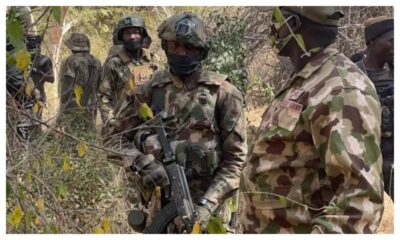
“Türkiye has a lot of experience in its own region with the activities of separatist terrorists. With this experience, Türkiye can help African countries that are facing similar security challenges,” Ahmet Kavas, Türkiye’s former ambassador to Chad and Senegal, tells TRT Afrika.
“Since the beginning of the 2020s, several African countries have experienced these problems and they are benefitting from Türkiye’s experience, especially countries like Ethiopia, Sudan, Somalia, Mali, Burkina Faso, Niger and Senegal.”
President Recep Tayyip Erdogan, first as prime minister and then as president, has made more than 50 visits to Africa, making him the world leader with the most visits to the continent.
His call that “the world is bigger than five” has been a push for reforms in the UN Security Council, among other things, to reflect Africa’s growing muscle in the international order.
“It [the phrase] is openly challenging the Western-dominated global order and offering African partners an alternative that prioritises sovereignty, speed and transactional conditionality. Many African governments, I think, find that preferable,” Bayram observes.
On the economic front, Türkiye has offered alternatives to a continent long regarded as a theatre of fierce competition for its natural resources among former colonial powers and emerging powers.
This is partly due to changing dynamics in Africa that have rendered Western powers inconsistent partners. African governments are increasingly questioning the West’s tendency to interfere in domestic affairs and sovereignty with a neocolonial mindset.
Related
Not colonial
Türkiye’s footprint across sub-Saharan Africa now includes an approximately 400-kilometre railway linking landlocked Ethiopia to the coastal Djibouti, a military base in Somalia, the largest indoor sports facility in eastern Africa, built in Rwanda, and floating power stations that provide electricity in Sierra Leone and Guinea-Bissau.
Yet the figures alone do not reveal the full extent of the evolving relationship. To pave the way for economic partnerships, Türkiye established bilateral free trade and economic cooperation agreements with 49 African countries.
The turning point in Türkiye’s relations with Africa began in 2005, when it received observer status with the African Union, and Ankara declared it the “Year of Africa”.
Over the next two decades, Türkiye’s diplomatic presence expanded to 44 embassies on the continent, while its flag carrier, Turkish Airlines, operates flights to 64 destinations across 42 African countries.
Ankara has also hosted numerous presidents, heads of government, and business leaders for talks to cement ties.
The Turkish capital has also witnessed the signing of trade agreements, peace mediations to end conflict and the ratification of security-related pacts.
“The core difference comes down to narrative and model. Former colonial powers’ general approach to Africa carries the weight of extraction, paternalism and imposed governance. Even when their intentions today are constructive, that history shapes every interaction. African publics feel it and African leaders cannot ignore it,” Bayram tells TRT Afrika.
“Türkiye arrives without that inheritance and it has been very deliberate about building an alternative identity.”
The article was firstpublished on TRT Afrika.



Troops foil ₦7m ransom assortment, rescue kidnap sufferer in Borno

“Broke people shouldn’t have kids” – DJ DSF says

Oyo authorities thwarts deliberate elimination of Balogun Ogbomoso

“I don’t trust myself when it comes to men because of my track record” – Reality TV star Khloe Kardashian speaks on being single for 4 years

Former Chelsea supervisor Antonio Conte in talks over Man United job, lays down circumstances

Rivers Govt condemns alleged compelled virginity testing of feminine secondary college college students

What will make Southwest assist Igbo presidency – Soludo

2027: Reciprocate Tinubu's assist for north – Shettima
-

 Politics16 hours ago
Troops foil ₦7m ransom assortment, rescue kidnap sufferer in Borno
- Special Reports2 days ago
“Broke people shouldn’t have kids” – DJ DSF says
- News3 days ago
Oyo authorities thwarts deliberate elimination of Balogun Ogbomoso
- Special Reports3 days ago
“I don’t trust myself when it comes to men because of my track record” – Reality TV star Khloe Kardashian speaks on being single for 4 years