World News
Trump's Next Target After Iran? Mali Could Become Strike Zone No. 8

The US has previously enhanced intelligence-sharing with Mali’s military government, which has faced criticism for its reliance on Russian mercenaries and alleged human rights abuses.
The Trump administration is considering military action against an al-Qaeda-linked militant group in Mali, according to a report by The Washington Post. If approved, the operation would make Mali the eighth country where President Donald Trump has authorised military strikes since returning to office, expanding a campaign that has already included operations in Yemen, Somalia, Syria, Iran, Iraq, Nigeria and Venezuela.
The militant group under consideration is Jama’at Nusrat al-Islam wal-Muslimin (JNIM), an al-Qaeda affiliate that has established a stronghold in Mali and expanded attacks into coastal West African countries. Officials described it as the best-armed militant organisation in the region and one of the world’s most powerful jihadist groups.
According to current and former US officials quoted in the report, there is disagreement within the administration over whether military action should proceed. They said Sebastian Gorka, the White House National Security Council, has emerged as one of the strongest advocates for striking JNIM.
A White House official said the US had been encouraging governments across North and West Africa “to purchase US equipment and services to support their war efforts against the terrorists”.
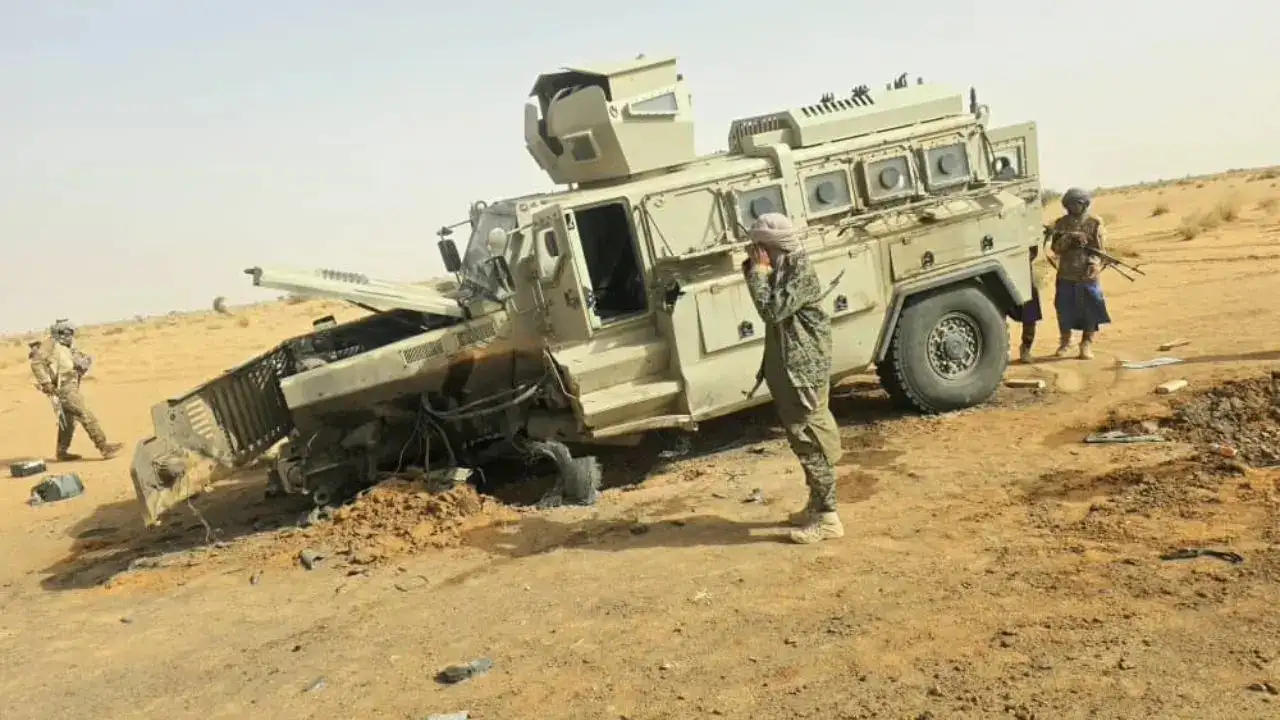
The aftermath of an attack by FLA separatist and jihadist militants in Gao.
Describing terrorism in the Sahel as a “multinational problem”, the official added: “We urge regional partners and NATO allies to support the Alliance of Sahel States in their war against JNIM and ISIS.”
The Alliance of Sahel States comprises Mali, Burkina Faso and Niger, where military governments have seized power in coups in recent years, reduced ties with Western countries and strengthened security cooperation with Russia.
The White House official argued that Moscow “has proven to be an ineffective security partner for Mali”, adding: “We hope that other African nations take note of Russia’s terrible performance in combating terrorism.”
The administration’s consideration of military options in Mali has not previously been reported.
Mali, a landlocked country of nearly 25 million people, has faced years of violence involving Islamist militant groups, government forces and Russian mercenaries hired by the ruling military junta.
JNIM has steadily expanded its influence, contributing to what analysts describe as the Sahel becoming the global epicentre of terrorism.
Last year, the group imposed a fuel blockade that disrupted much of Mali. This year, it launched coordinated attacks across the country, including operations in the capital, Bamako, the capture of a strategic northern town from Malian and Russian forces, and a suicide bombing that killed the country’s defence minister.
Meanwhile, IS Sahel, an Islamic State affiliate and rival to JNIM, has strengthened its presence near Mali’s border with Niger. US missionary Kevin Rideout, who was kidnapped last year, is believed to be held in Mali.
To combat the insurgency, Mali’s military government has relied on Russian mercenaries, initially from the Wagner Group and more recently from Africa Corps, which has closer links to Russia’s defence ministry.
Rights organisations and previous reporting by The Washington Post have accused Russian forces of committing widespread abuses during their operations in Mali.
Héni Nsaibia, West Africa senior analyst at the Armed Conflict Location & Event Data (ACLED) project, said Mali’s armed forces and their Russian partners were responsible for more civilian deaths than JNIM and IS Sahel combined. According to ACLED, Malian forces and Russian fighters were responsible for 925 civilian deaths last year, compared with 232 attributed to Islamist militant groups.
“It is extremely problematic that a government like the US or any Western partner would provide support to these regimes whose legitimacy remains contested, and which are incredibly fragile and repressive,” Nsaibia said.
Current and former US officials said Washington expanded intelligence-sharing with Mali’s military government last year as part of an effort by the Trump administration to rebuild relations.
The intelligence was used in strikes by Malian forces after the Biden administration had largely distanced itself from the junta because of its refusal to commit to a timetable for democratic elections and its cooperation with Russian forces.
The intelligence was used in strikes by Malian forces after the Biden administration had largely distanced itself from the junta because of its refusal to commit to a timetable for democratic elections and its cooperation with Russian forces.
However, officials said the cooperation remains limited and falls well short of the US security partnership with Nigeria, which has included American air strikes and a ground operation that killed one of Islamic State’s senior leaders in Africa.
Analysts say any direct US military intervention in Mali could also increase the risk of confrontation with Russian forces operating in the country, potentially requiring military deconfliction arrangements similar to those previously used by Washington and Moscow during the war in Syria.









Sterling Financial Holdings Profit Rises 21% to N75.37 Billion as Assets Hit N5.1 Trillion

Nigeria to start large-scale native manufacturing of Weapons inside one 12 months — Minister of Defense Musa

FG to current 2027 finances earlier than yr finish

Wike deceived LP, others into Rainbow Coalition, endorsed solely APC, PDP factions – Rivers ADC

Oredo: NDC Reps candidate Omosigho preaches calm after court docket ruling in Edo

Women, youths key to Nigeria’s $1trn economic system – Shettima

COAS duties non-public sector on indigenous manufacturing of navy gear

Carer caught stealing £8,000 jewelry from weak consumer on hidden CCTV jailed for 3 years
-

 Finance3 days ago
Sterling Financial Holdings Profit Rises 21% to N75.37 Billion as Assets Hit N5.1 Trillion
- Special Reports3 days ago
Nigeria to start large-scale native manufacturing of Weapons inside one 12 months — Minister of Defense Musa
- Breaking3 days ago
FG to current 2027 finances earlier than yr finish
- Politics3 days ago
Wike deceived LP, others into Rainbow Coalition, endorsed solely APC, PDP factions – Rivers ADC