World News
The Bab el-Mandeb Blockade Is No Longer a Warning — It's Happening, At the Worst Possible Time

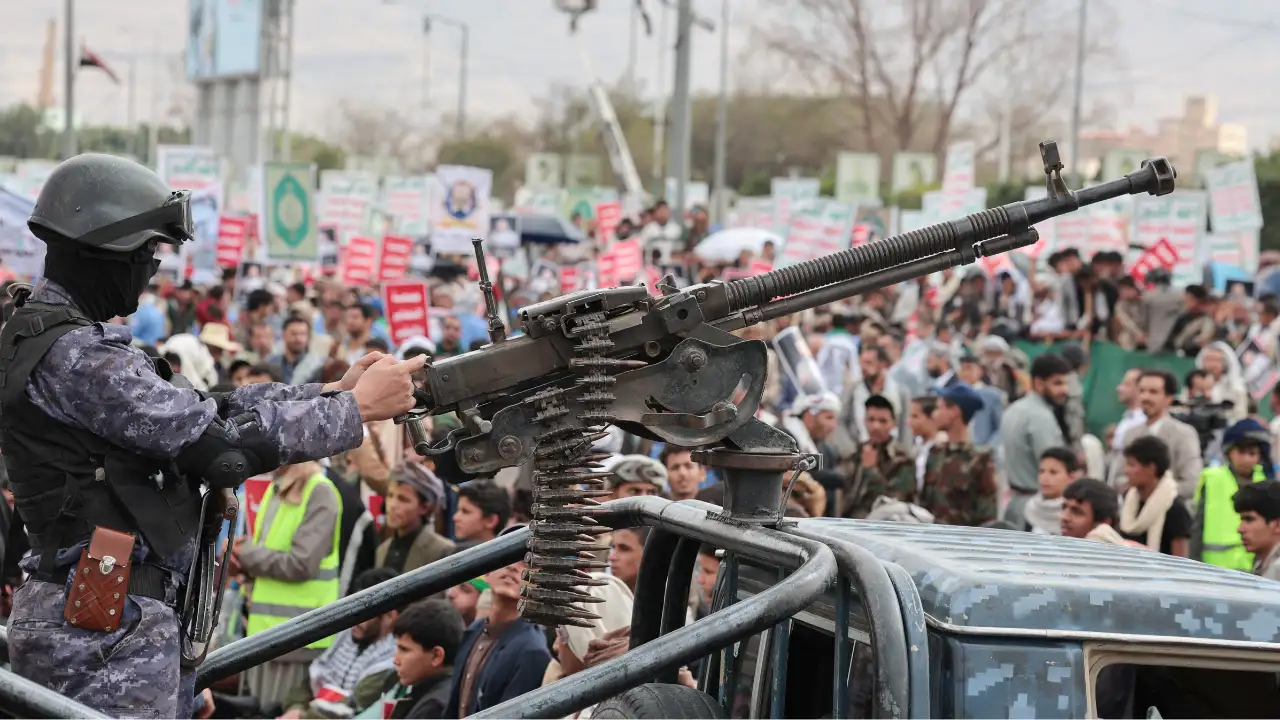
Almost every barrel of oil that leaves West Asia must pass through narrow maritime corridors. In 2026, that primary gateway – the Strait of Hormuz (33 kilometres wide at its narrowest point) became the most contested stretch of water on Earth, with the Bab el-Mandeb emerging as a second flashpoint, raising the risk of a dual-front disruption to global trade.
What Is the Bab el-Mandeb Strait And Why Is It Crucial
The Bab el-Mandeb, Arabic for “Gate of Tears”, is a narrow strait that connects the Red Sea to the Gulf of Aden and the Indian Ocean. It forms a vital trade route between the Mediterranean Sea and the Indian Ocean via the Red Sea and the Suez Canal.
The Strait is 29 kilometres (18 miles) across at its narrowest point, even less than Hormuz, making huge container vessels particularly vulnerable to attack, with the Houthis deploying missiles and drones.
Why The Timing is Critical
The timing is what makes the situation particularly fragile. With the Hormuz corridor already under strain, given the escalating tensions between the United States and Iran, fresh tensions between the Houthis and Saudi Arabia would risk turning a regional security concern into a broader global supply vulnerability, as around 12 per cent of total seaborne-traded oil passes through the Bab el-Mandeb Strait. And, it was evident as Brent crude jumped by more than 13 per cent, breaching the $100 a barrel mark, after the Houthis’ announcement. When the Iran war began in February, the oil prices were as low as $71.
Speaking exclusively with Times Now, research historian James Bowden said, “The greatest threat is to Saudi ports along the Red Sea coast and not shipping.” According to him, Yemen’s Houthi movement, also known as Ansar Allah, has issued repeated warnings in the past, many of which did not translate into major escalation. He pointed to the presence of European naval missions in the region which are capable of deterring direct attacks on vessels.
Bowden indicated that if Riyadh and Houthis trade attacks, there is a possibility that the US may intervene. “…Look for the US to bomb the Port of Hodeidah and parts of Sanaa to remind the Ansar Allah that the US is still in the region and will ensure freedom of navigation,” he said. Bowden’s organisation ‘Near East Observers’ has been tracking the Iran-backed group for over three years now.
 https://youtu.be/tq3hPylNihM?si=UaFWz7qmOf7A6BZ0
From Threats To Action in Red Sea
And, it is already happening. Houthis attacked two Saudi oil tankers in the Red Sea, using cruise missiles and drones, claiming that it had violated the blockade near Bab el-Mandeb. In response, Saudi Arabia struck the port city of Hodeida in Yemen.
Following the early morning strikes, Saudi Arabia warned of “potential danger” in the Yanbu area, home to a major Red Sea port capable of shipping millions of barrels of oil daily.
Bowden flagged that Saudi Arabia has taken action earlier and bombed large portions of Northern Yemen before, however, with little effect.
Is There an Alternative to Bab el-Mandeb?
Unlike the Strait of Hormuz, there is an alternative route to the Bab-el Mandeb. Ships sailing between Asia and Europe can bypass Bab el-Mandeb by travelling around Africa. But that comes at a huge logistical cost.
In the case of Saudi Arabia, the closure of the southern route would complicate its oil trade as it was already dependent on the Red Sea amid tensions in Hormuz. Riyadh had been using its East-West Pipeline to the Red Sea as an alternative to the Strait of Hormuz.
According to Muyu Xu, senior crude oil analyst who spoke to CNN, ships “will have to take a much longer route, sailing westward through the Suez Canal and then around the Cape of Good Hope to transport Saudi oil to Asia. This journey would take nearly 50 days to China—more than double the time required via the Bab el-Mandeb.”
However, for the Houthis, the escalation could also aim to extract financial and political concessions from Riyadh, and Iran-style leverage over a global chokepoint, Baraa Shiban, a Yemeni analyst and associate fellow at the Royal United Services Institute think tank told Reuters.
The Bab el-Mandeb Threat is Not New
Like the Strait of Hormuz, the Bab el-Mandeb is a known chokepoint. The Houthis attacked over 100 merchant vessels with missiles and drones, from November 2023 until January 2025. The attacks were in response to Israel’s military action on Gaza following the October 7, 2023, attacks.
The Houthis ceased their attacks following a US-brokered ceasefire between Israel and Hamas in October 2025.
If the attack continues in the Bab el-Mandeb, the entire world could feel the ripple effects, with impact being felt across global energy markets and supply chains. Shipping lanes operate on risk perception as much as reality, meaning even limited strikes or near-misses can trigger immediate rerouting, higher insurance costs, and temporary suspension of traffic. In a chokepoint this tight, it doesn’t take a sustained blockade to choke flows; one successful hit can effectively stall movement.












Troops foil ₦7m ransom assortment, rescue kidnap sufferer in Borno

We paid ₦278 million to retired judges – Kogi pension fee

2027: Reciprocate Tinubu's assist for north – Shettima

Bandits kill girl, injure two whereas harvesting groundnuts in Plateau farm

Troops rescue two kidnapped ladies, arrest 4 suspected bandits in Kebbi

Matawalle inspects AFRIDEX venue forward opening

Customs rescues 3 endangered pangolins in Ogun, warns wildlife traffickers

Alleged extortion: FCT Police Commissioner orders probe
-

 Politics2 days ago
Troops foil ₦7m ransom assortment, rescue kidnap sufferer in Borno
- News2 days ago
We paid ₦278 million to retired judges – Kogi pension fee
- Politics3 days ago
2027: Reciprocate Tinubu's assist for north – Shettima
- Politics3 days ago
Bandits kill girl, injure two whereas harvesting groundnuts in Plateau farm