News
Justice, not religion should decide Nigeria’s 2027 elections – Adebayo


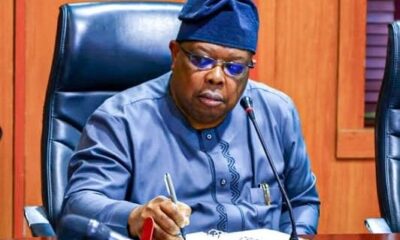
Presidential candidate of the Social Democratic Party (SDP), Prince Adewole Adebayo, has dismissed claims that a Muslim-Muslim presidential ticket remains a decisive electoral advantage ahead of the 2027 general election.
Adebayo insisted that Nigerians were more concerned with justice, security, economic prosperity and accountable leadership than religious identity.
Speaking on ARISE Television’s Morning Show, Adebayo argued that the country’s worsening economic hardship and insecurity had shifted public attention away from religious considerations toward issues that directly affect daily life.
According to him, Islamic jurisprudence places greater emphasis on justice, competence and fairness in leadership than on the religious identity of those in public office.
He maintained that what Nigerians desire is “a righteous and just leader,” regardless of religious affiliation, adding that attempts to mobilize voters on religious sentiment amount to political manipulation.
The SDP flag bearer further insisted that governance should be assessed by performance rather than the faith professed by political leaders.
On his earlier description of the Tinubu administration as one marked by “abominations,” Adebayo identified what he called five major areas of concern, alleging constitutional violations, weakening of democratic institutions, perceived injustice in governance and public appointments, administrative incompetence, and lack of transparency and accountability in government.
He also questioned claims that the All Progressives Congress (APC) could relied on former President Muhammadu Buhari’s electoral strength in 2027, arguing that public confidence in the former president had declined significantly before he left office.
Presenting his vision for Nigeria, Adebayo said an SDP-led government would prioritise security by strengthening the armed forces and law enforcement agencies, tackle unemployment through effective implementation of development-focused budgets, promote economic growth, uphold the rule of law, ensure fairness across all regions of the country, and create greater opportunities for youth participation in governance and innovation.
On allegations that opposition parties faced political intimidation, Adebayo claimed the SDP had repeatedly suffered administrative and legal obstacles during elections, alleging delays in the nomination and recognition of its candidates.
He said the party had consistently relied on the courts to protect its constitutional rights while maintaining internal discipline against acts capable of undermining its activities.
Responding to suggestions that religion remains a major determinant of voting behaviour in Nigeria, Adebayo acknowledged that faith influences some political decisions but insisted that it should not overshadow issues affecting the welfare of citizens.
Drawing from the 1993 presidential election won by the late Chief MKO Abiola and Babagana Kingibe on a Muslim-Muslim ticket, he argued that Nigerians were capable of supporting candidates based on competence, vision and integrity rather than religious identity.
According to him, insecurity, poverty, rising education costs and economic hardship affected Nigerians irrespective of religion, making “kitchen-table issues” the real basis upon which citizens should evaluate political leaders.
The SDP presidential candidate concluded that national unity, justice, competence and accountable governance not religious or ethnic sentiments should define Nigeria’s democratic choices ahead of the 2027 general election.



FG targeting 6,500MW of power supply by December, says Tegbe

ADC challenges Tinubu to clarify ‘all is fair in politics’ remark

Oluwo urges Tinubu to grant Nnamdi Kanu presidential amnesty

BBNaija: Biggie gives Flora secret mission to make Aikou fall in love

‘Win With Tinubu’ team to meet Ododo, targets 239 wards in Kogi

President Tinubu condemns mass abduction in Niger state, orders immediate rescue operation

MTN Nigeria emerges as key driver of Group’s first half 2026 growth

Troops uncover 3,120 litres of stolen crude, refining equipment in Rivers forest
-

 Breaking2 days ago
FG targeting 6,500MW of power supply by December, says Tegbe
- Politics3 days ago
ADC challenges Tinubu to clarify ‘all is fair in politics’ remark
- News3 days ago
Oluwo urges Tinubu to grant Nnamdi Kanu presidential amnesty
- Breaking3 days ago
BBNaija: Biggie gives Flora secret mission to make Aikou fall in love