World News
Iran Says US 'Repeatedly Violated' Peace Deal After Strikes, Warns Of 'Decisive Measures'

Iran has accused the US of violating a peace agreement aimed at ending the Iran War after the US Military struck targets around the Strait of Hormuz.
Iran has accused the United States of repeatedly violating the agreement meant to bring the Iran War to an end, opening a new dispute over the fragile truce after US forces struck sites around the Strait of Hormuz. Tehran’s foreign ministry warned of “decisive measures” in response and also pointed to Washington’s decision to restore sanctions on Iranian oil sales. The US Military says Iran, not Washington, broke the ceasefire by attacking three commercial vessels moving through the strategic waterway.
Both sides are now invoking the same peace arrangement to justify sharply different actions. The memorandum of understanding signed last month was supposed to begin a 60-day negotiating period on Iran’s nuclear programme and a permanent end to hostilities, yet military exchanges and maritime incidents have continued. Wednesday’s strikes have pushed that disagreement into the open: Washington calls them an immediate response to Iranian aggression, while Tehran says the US has established a pattern of breaching the deal.
Iranian state media reported explosions on Qeshm island in the Strait of Hormuz and in Sirik and Bandar Abbas after the US operation began. American officials cited by multiple media outlets said Iranian weapons launch sites, air defence systems and coastal surveillance infrastructure were among the targets. The operation, they said, was expected to continue for hours.
CENTCOM tied the strikes directly to attacks on three tankers a day earlier. “Iran’s demonstrated aggression was unwarranted, dangerous, and a clear violation of the ceasefire,” US Central Command said. One of the ships hit was the Qatari LNG carrier Al Rekayyat, which was travelling south through the strait towards the Gulf of Oman.
Tehran’s response went beyond the bombing. Iran’s foreign ministry accused the US of “repeated violations” of the MOU and included Tuesday’s decision by the US Treasury to revoke a temporary suspension of sanctions on Iranian oil sales among the alleged breaches. Washington had eased the restrictions last month after the memorandum was signed, only to reimpose them following the latest attacks on commercial vessels.
For Iran, Washington is not adhering to the negotiated framework. That argument places the oil sanctions alongside the US Military strikes near Hormuz, even as Washington insists its actions followed an Iranian breach. Neither side is accepting the other’s chronology of responsibility.
Behind the immediate exchange is a deeper argument over control of shipping through the Strait of Hormuz. All three tankers were hit close to Oman, which has proposed a shipping corridor nearer its coastline. Iran opposes the proposal and has sought to impose charges on vessels passing through the waterway.
Tehran said on Tuesday that US efforts to establish alternative routes through the strait were themselves a breach of the MOU. Iran maintains that the agreement leaves the management of the waterway’s reopening to Tehran, in consultation with Oman, with commercial traffic expected to return to pre-war levels within 30 days. Washington’s interpretation is plainly different. The wording of the memorandum has left room for competing readings, according to experts cited in the supplied account. That ambiguity is no longer a technical problem buried inside a diplomatic document.








Troops foil ₦7m ransom assortment, rescue kidnap sufferer in Borno

Oyo authorities thwarts deliberate elimination of Balogun Ogbomoso

Former Chelsea supervisor Antonio Conte in talks over Man United job, lays down circumstances

What will make Southwest assist Igbo presidency – Soludo

“Broke people shouldn’t have kids” – DJ DSF says

“I don’t trust myself when it comes to men because of my track record” – Reality TV star Khloe Kardashian speaks on being single for 4 years

Police rescue two kidnapped youngsters on Abuja-Kaduna freeway

No voter needs to be denied voting rights resulting from incapacity, insecurity – INEC
-

 Politics22 hours ago
Troops foil ₦7m ransom assortment, rescue kidnap sufferer in Borno
- News3 days ago
Oyo authorities thwarts deliberate elimination of Balogun Ogbomoso
- Special Reports3 days ago
Former Chelsea supervisor Antonio Conte in talks over Man United job, lays down circumstances
- Politics3 days ago
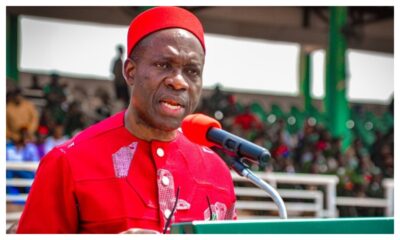
What will make Southwest assist Igbo presidency – Soludo