News
FG threatens to shut Lagos-Calabar highway over safety violations

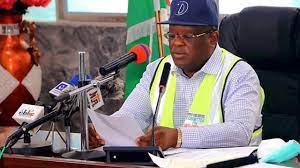

The Federal Government has given motorists and other road users on the Lagos section of the Lagos-Calabar Coastal Highway two weeks to comply with safety regulations or risk the shutdown of the route.
The Federal Controller of Works in Lagos State, Olufemi Dare, issued the ultimatum on Monday during an inspection of the highway, citing dangerous speeding, vandalism, illegal parking and other activities threatening the safety of road users.
Dare said the directive followed concerns raised by the Minister of Works, David Umahi, over persistent violations of safety measures along the highway.
He warned that the government would have no choice but to shut the road if there was no significant improvement after the two-week grace period.
“Within two weeks, if there’s no improvement on all these issues, then we have no option than to come back and shut down this road,” Dare said.
Speed limit, parking violations
The controller stressed that the Lagos section of the coastal highway remained under construction and should not ordinarily have been opened to traffic before the completion of some of its bridges.
He said motorists were expected to observe a maximum speed limit of 30 kilometres per hour, particularly around construction zones.
Dare expressed concern that some motorists were driving as fast as 120 kilometres per hour on sections where bridge and other construction works were ongoing.
“We have said your speed on the coastal road must not be more than 30 kilometres per hour,” he said.
He said the government was also concerned about reports of deaths on the highway, warning that unsafe practices could no longer be tolerated.
Articulated vehicle operators were also cautioned against parking trucks and trailers along the route, while motorists were warned against creating or using illegal U-turn points.
Dare said anyone arrested for creating or using unauthorised U-turns would be prosecuted.
He added that commercial motorcycles, tricycles, hawking and animal grazing had been prohibited along the highway.
“We don’t want Okada motorcycles, tricycles. We don’t want them on the coastal road,” he said.
The controller further disclosed that the government would remove shanties and other illegal structures along the highway.
Police deployment, vandalism
On security, Dare said the government had reached an agreement with the Lagos State Police Command to increase police deployment along the route.
He said the decision followed meetings between Umahi and the state Commissioner of Police, Fatai Tijani.
“Beginning from this morning, we’ve started to see the improvement in deployment of police. And we are going to have more,” Dare said.
Dare also identified vandalism of safety infrastructure as a major challenge, revealing that about five kilometres of ClearVu fencing had been removed.
He added that approximately 18 kilometres of concrete covers had also been vandalised and taken away.
According to him, the government was considering replacing the steel ClearVu fencing with concrete barriers in vulnerable areas because the existing fencing could be easily removed.
He said CCTV cameras would also be deployed along the highway to strengthen surveillance.
Coastal guards to support security
Dare disclosed that the government had approved the recruitment of 40 coastal guards for Section 1 of the highway, with four personnel to be drawn from each community along the route.
The guards, he explained, would work alongside the police to provide community-level surveillance, while additional personnel would be recruited for Section 2.
He said some previously engaged coastal guards had been attacked by vandals, making stronger police protection necessary.
Dare added that the government planned to reorganise and train the coastal guards under the direct supervision of the Lagos State Police Command.
The Lagos section of the Lagos-Calabar Coastal Highway stretches about 103 kilometres and comprises two sections: Section 1, covering approximately 47 kilometres, and Section 2, covering about 56 kilometres.
The two sections have 20 major bridges, with 10 bridges in each section, several of which are still under construction.
Dare said motorists had the Lekki-Epe Expressway as an alternative route should the government eventually be forced to shut the coastal highway over continued safety violations.














Police uncover ‘high-tech’ c@nnabis farm in Lagos, arrest two suspects

ONSA, DSS, Police rescue 8 kidnap victims in Kaduna

28 states approve State Police Bill as National Assembly prepares to transmit to Tinubu

Kidnappers abduct two visually impaired individuals in Plateau

FG introduces stricter payroll guidelines as personnel prices rise to N1.96tn

How Obasanjo’s Threat Forced Me to Flee Nigeria for Ghana – Amaechi

Osun NBA calls for digital improve, repairs for courts

Nigerian lady exhibits off fashionable outfit she wore to her husband’s wedding ceremony to his third spouse (video)
-

 Breaking3 days ago
Police uncover ‘high-tech’ c@nnabis farm in Lagos, arrest two suspects
-
 News3 days ago
ONSA, DSS, Police rescue 8 kidnap victims in Kaduna
- Breaking3 days ago
28 states approve State Police Bill as National Assembly prepares to transmit to Tinubu
- Politics3 days ago
Kidnappers abduct two visually impaired individuals in Plateau