News
FEC approves tax treaties with three countries *Full list

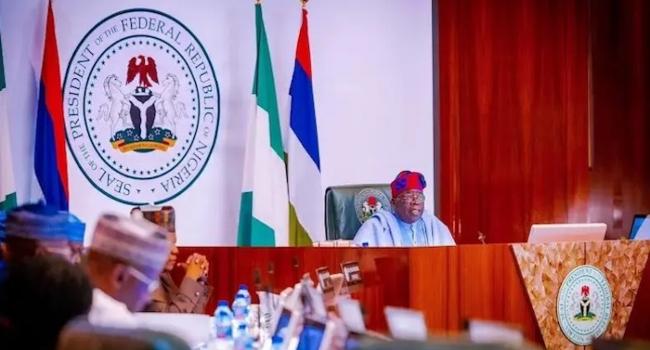
The Federal Executive Council (FEC) has approved Double Taxation Avoidance Agreements between Nigeria and Ghana, Tanzania and Switzerland as part of efforts by the Federal Government to deepen cross-border investment and make the country more attractive to international investors.
The Minister of Finance and Coordinating Minister of the Economy, Dr Taiwo Oyedele, disclosed this on Wednesday while briefing State House correspondents after the FEC meeting presided over by President Bola Ahmed Tinubu at the Presidential Villa, Abuja.
Oyedele explained that the agreements were designed to prevent individuals and companies conducting business between Nigeria and the three countries from being subjected to tax obligations twice on the same income. Blueprint reports
According to him, the treaties would provide greater certainty for investors, encourage Nigerian businesses to expand into foreign markets and improve the flow of capital into the country.
He said the agreement with Ghana was particularly significant because of the strong economic ties and commercial activities between both countries.
Government targets wider tax treaty network
Oyedele said the latest agreements were part of a broader strategy by the Federal Government to expand Nigeria’s network of tax treaties with other countries.
He explained that a more extensive network would help Nigerian businesses operate internationally while giving foreign investors greater confidence to commit capital to the Nigerian economy.
“The overall objective of these treaties is to ensure that Nigeria can expand the opportunities available to our businesses to invest in other countries and also attract investment from those countries, particularly where we have significant economic interests, such as Ghana,” the minister said.
He noted that Nigeria needed to become more competitive in attracting international capital, adding that predictable tax arrangements were an important component of an investment-friendly environment.
Oyedele cited South Africa as an example of a country that had established an extensive treaty network, with more than 60 Double Taxation Avoidance Agreements.
He said Nigeria would continue to pursue similar arrangements with strategic economic partners as part of efforts to strengthen international trade and investment.
The minister described the latest approvals as another step towards facilitating cross-border capital flows and improving Nigeria’s economic relationship with key countries.
FEC approves $1.25bn financing for jobs
In another major decision, the council approved a $1.25 billion financing facility from the International Development Association (IDA) and the International Bank for Reconstruction and Development (IBRD).
Oyedele said the facility would support the government’s Investment and Jobs Acceleration Development Policy programme.
According to him, the financing would be deployed to support policy measures aimed at increasing productive investment and expanding employment opportunities.
He described the facility as concessional, with a repayment period of approximately 30 years.
“This is a concessional facility with a repayment period of about 30 years, which we are going to dedicate to accelerating job creation,” Oyedele said.
The minister identified unemployment and inadequate employment opportunities as among the major challenges confronting the Nigerian economy.
He said the facility was therefore expected to complement the administration’s broader economic reforms by supporting investment, expanding productive activities and creating opportunities for Nigerians.
Oyedele said the initiative was also consistent with the government’s objective of promoting inclusive economic growth and ensuring that economic reforms translate into more opportunities for citizens.
Tinubu orders forensic examination of government systems
Meanwhile, President Tinubu has directed a comprehensive forensic examination of the Federal Government’s administrative, accounting and payroll systems following the discovery of additional fictitious agencies by the Independent Corrupt Practices and Other Related Offences Commission (ICPC).
The directive followed investigations into a fake body identified as the Presidential Foreign Intervention Promotion Council.
Oyedele said the investigation had raised questions about how an organisation that did not legitimately exist as a government agency was able to penetrate several layers of the Federal Government’s administrative structure.
He disclosed that the ICPC had subsequently uncovered two additional fictitious agencies, prompting the council to approve a wider review of government systems and internal controls.
The exercise will examine administrative procedures, accounting processes and payroll structures to determine how such entities were able to advance through the government’s systems.
According to the minister, particular attention would be paid to the Integrated Personnel and Payroll Information System (IPPIS), given the possibility that fictitious agencies could be accompanied by fictitious employees.
“Because if you have fake agencies, you most likely have fake employees,” he said.
Fake agency obtained government codes
Oyedele disclosed that the Presidential Foreign Intervention Promotion Council had gone beyond simply existing on paper.
According to him, the fictitious organisation had secured an office within the Federal Government’s structure and obtained both an administrative code and a Treasury Single Account (TSA) code before it was discovered.
He, however, clarified that no government money had been paid into accounts associated with the fake organisation.
“Something went wrong. Someone managed, with whatever people they colluded with, to create a fake agency that had an office within the institution of the Federal Government,” Oyedele said.
He added that the organisation had managed to obtain the relevant administrative and TSA codes, although government funds were not ultimately transferred into the accounts.
The minister said the incident had gone far enough to expose significant weaknesses in government procedures and therefore required a comprehensive investigation.
He said the exercise would establish how the fictitious agency was created, identify individuals who may have participated in the process and recommend measures to prevent similar breaches.
Oyedele declined to disclose the identities of the two additional fictitious agencies uncovered by the ICPC, saying the information was not available for public disclosure at the briefing.
ICPC uncovers two more fictitious agencies
Minister of Information and National Orientation, Mohammed Idris, provided further details on the development, explaining that the ICPC investigation was initiated following an earlier directive from President Tinubu.
Idris said the commission’s findings presented to the President revealed that two other fictitious agencies had been identified in the course of the investigation.
According to him, the discovery showed that the problem extended beyond financial management and involved weaknesses in the administrative processes through which government institutions are created and recognised.
He said President Tinubu had consequently directed the Attorney-General of the Federation and the Minister of Finance to review the relevant administrative and accounting procedures.
The two officials were also directed to work with professional audit firms to conduct forensic examinations of the affected systems.
Idris said the purpose was to identify loopholes, determine how the fictitious entities were able to penetrate government structures and permanently strengthen the controls.
He described the planned exercise as a “total evaluation” of the system designed to prevent another incident capable of damaging the credibility of the Federal Government.
The minister also cautioned against immediately attributing the weaknesses to the present administration, noting that some of the vulnerabilities could have existed before the Tinubu administration came into office.
He said the President wanted the investigation expanded to determine whether similar irregularities existed in other areas of government.
IPPIS to come under scrutiny
The planned forensic review will also extend to the federal payroll system, with Oyedele stressing the importance of protecting public funds and ensuring that only legitimate government employees receive salaries and allowances.
The minister said the government had spent about N9.5 trillion in additional salary and allowance payments to civil servants, describing the figure as higher than the Federal Government’s share of savings from the removal of petrol subsidy.
He warned that fictitious employees or agencies within government systems could further strain public finances and reduce the resources available to legitimate workers.
“We cannot afford to have fake people hanging around. It undermines our ability to pay our people well—the people who are doing the hard work,” he said.
The minister said the government’s objective was not only to expose irregularities but also to strengthen systems so that legitimate public servants could receive appropriate remuneration without scarce public resources being diverted.
He assured Nigerians that findings from the investigation would be acted upon and that the government would provide updates as the exercise progresses.
The latest FEC decisions therefore combine measures aimed at attracting foreign investment and creating jobs with a renewed effort to strengthen transparency and accountability within the Federal Government’s administrative and financial systems.



ADC challenges Tinubu to clarify ‘all is fair in politics’ remark

Oluwo urges Tinubu to grant Nnamdi Kanu presidential amnesty

FG targeting 6,500MW of power supply by December, says Tegbe

MTN Nigeria emerges as key driver of Group’s first half 2026 growth

BBNaija: Biggie gives Flora secret mission to make Aikou fall in love

‘Win With Tinubu’ team to meet Ododo, targets 239 wards in Kogi

President Tinubu condemns mass abduction in Niger state, orders immediate rescue operation

FG unveils N365m national laureate award, names medical prize after Stella Adadevoh
-

 Politics3 days ago
ADC challenges Tinubu to clarify ‘all is fair in politics’ remark
- News3 days ago
Oluwo urges Tinubu to grant Nnamdi Kanu presidential amnesty
- Breaking2 days ago
FG targeting 6,500MW of power supply by December, says Tegbe
- News2 days ago
MTN Nigeria emerges as key driver of Group’s first half 2026 growth