World News
Buhari-Era Origins Behind ‘Fake’ Agency, Budget Office Explains PFIPC Budget Allocation

- Budget Office says the controversial PFIPC evolved from an advisory council established under former President Muhammadu Buhari in 2019.
- Agency’s ₦802.98 million personnel allocation remained untouched because it never secured financial clearance or recruited staff.
- Director-General insists no public funds were released or spent despite the National Assembly’s appropriation.
The Budget Office of the Federation has traced the origin of the controversial Presidential Foreign Intervention Promotion Council (PFIPC) to the administration of former President Muhammadu Buhari, while insisting that no public funds were released to the agency despite its inclusion in the 2026 Appropriation Act.
The clarification follows the Presidency’s declaration that the PFIPC was a fake agency and the ongoing investigation by the Independent Corrupt Practices and Other Related Offences Commission (ICPC).
ATTENTION: Click “HERE” to join our WhatsApp group and receive News updates directly on your WhatsApp!
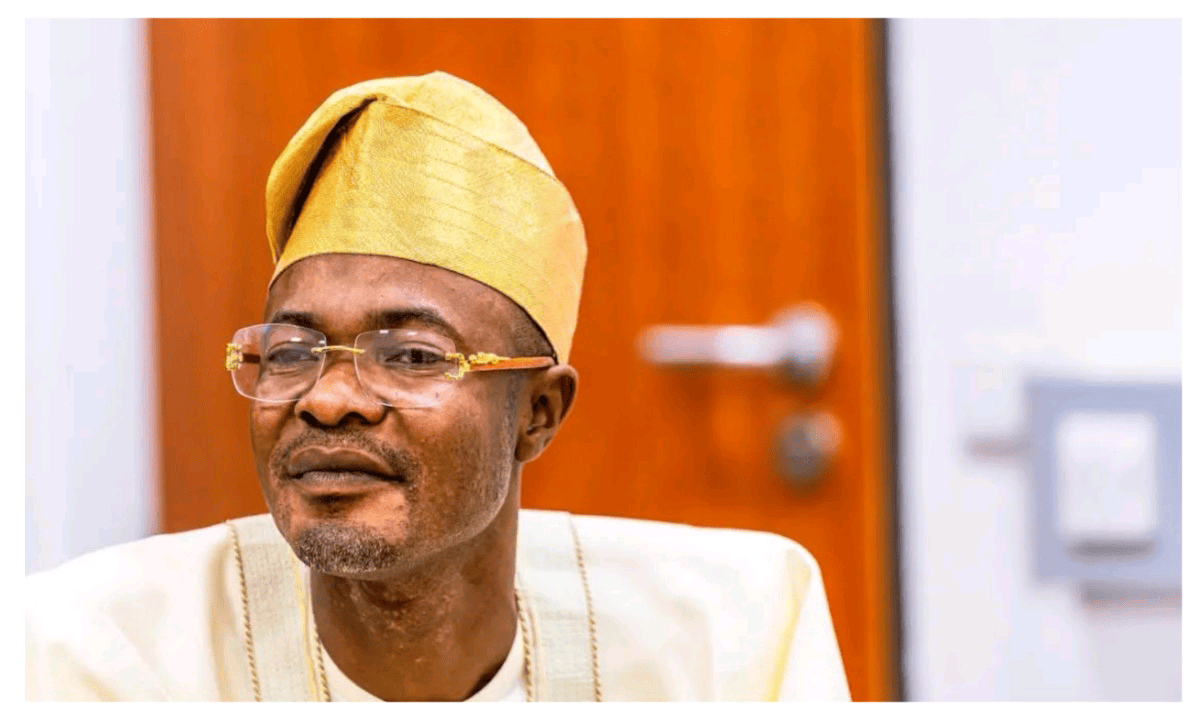
Director-General of the Budget Office, Mr. Tanimu Yakubu, made the disclosure in a statement after appearing before the House of Representatives, explaining that the agency did not emerge independently but evolved from the Presidential Economic Advisory Council (PEAC), inaugurated by Buhari on October 9, 2019.
READ ALSO: Atiku Urges N’Assembly to Summon CBN Governor, Accountant-General Over PFIPC Accounts
Yakubu said that by the time preparations for the 2026 federal budget commenced, several government institutions had already recognised the council through official administrative processes.
According to him, the Office of the Accountant-General of the Federation had assigned the PFIPC an administrative code, while the Office of the Head of the Civil Service of the Federation approved its establishment and granted a recruitment waiver. He added that the applicable public service salary structure was also already in place before the Budget Office received the agency’s proposals.
He stressed that the Budget Office neither created the council nor approved its establishment, but merely carried out its statutory responsibility of assessing the financial implications of documents submitted by relevant government institutions.
Yakubu disclosed that although the council proposed a personnel budget of ₦3.85 billion for the 2026 fiscal year, the Budget Office independently reviewed the request and reduced it to ₦802.98 million using the approved establishment, salary structure and existing costing methodology.
He explained that the revised figure reflected the Budget Office’s fiscal assessment rather than the agency’s original proposal.
The Budget Office chief, however, maintained that the personnel allocation never translated into expenditure because the agency failed to obtain the mandatory Financial Clearance required before recruitment, payroll enrolment and salary payments could commence.
He explained that Financial Clearance serves as the legal gateway for personnel spending and can only be issued after all fiscal and regulatory conditions have been satisfied.
Yakubu noted that although the 2026 Appropriation Bill received presidential assent on March 31, 2026, another key requirement remained outstanding because the National Salaries, Incomes and Wages Commission had not certified the proposed staffing and remuneration framework.
As a result, he said, the Budget Office withheld Financial Clearance, preventing any recruitment or salary payments.
He further clarified that personnel appropriations are not released to agencies as lump sums but are paid monthly into the accounts of verified employees after due process has been completed.
According to him, since the PFIPC never recruited staff or enrolled anyone on the federal payroll, no salary became payable and none of the appropriated personnel funds was accessed.
“There was no lawful recruitment, no payroll enrolment and no personnel expenditure. Consequently, not one kobo of the personnel allocation was released,” Yakubu stated.
The PFIPC controversy erupted in June after the Presidency, through the Chief of Staff to the President, Femi Gbajabiamila, disowned the council and petitioned security agencies over its activities.
The agency’s Director-General, Prince Adeniyi Adeyemi, subsequently rejected the Presidency’s position and alleged that Gbajabiamila demanded money to facilitate his appointment, an allegation the Chief of Staff denied before filing a ₦15 billion defamation suit against him.
Adeyemi was later arrested in connection with alleged forgery and the PFIPC scandal.
Before his arrest, he claimed to have personally lobbied officials of the Budget Office to secure the agency’s inclusion in the 2026 federal budget.
The Central Bank of Nigeria has also confirmed opening two domiciliary accounts for the PFIPC on the instruction of the Office of the Accountant-General of the Federation but stated that neither account was ever funded or operated.



Kano man rescued from well after he got trapped trying to rescue cow

Four children held captive in truck for 7 years by woman and her fiancé
âMake una help me o. Yahoo boys no go k!ll person for Ekpoma- Woman shouts after car rammed directly into her shop in Edo state

MAN seeks safeguards for manufacturers under new tax law

First HoldCo Climbs 4.65% as Institutional Demand Remains Strong

Weed out kakistrocrats in your presidency or theyâll continue to mess you up- Ndume tells President Tinubu

âIf Iâm broke as a man, where will I get â¦700k to join a gospel hookup platform?â â UK-based doctor slams Pastor Kingsley Okonkwo

NLC General Secretary Emmanuel Ugboaja dies at 60 after prolonged illness
-

 Special Reports3 days ago
Kano man rescued from well after he got trapped trying to rescue cow
- Special Reports3 days ago
Four children held captive in truck for 7 years by woman and her fiancé
- Special Reports3 days ago
âMake una help me o. Yahoo boys no go k!ll person for Ekpoma- Woman shouts after car rammed directly into her shop in Edo state
- Business3 days ago
MAN seeks safeguards for manufacturers under new tax law