News
Beyond meals, shelter: Revealing plight of Benue IDPs 3 years after

By Taiwo Ajayi
For hundreds of displaced households in Benue state, life has turn out to be a every day wrestle to outlive far-off from the communities they as soon as referred to as residence. The lack of ancestral houses, farmlands, livelihoods and acquainted environment has left many depending on humanitarian help, usually with little certainty about what tomorrow holds.
But past the meals distributions, momentary shelters and emergency medical interventions lies a deeper query: are the individuals receiving humanitarian help really getting what they should rebuild their lives?
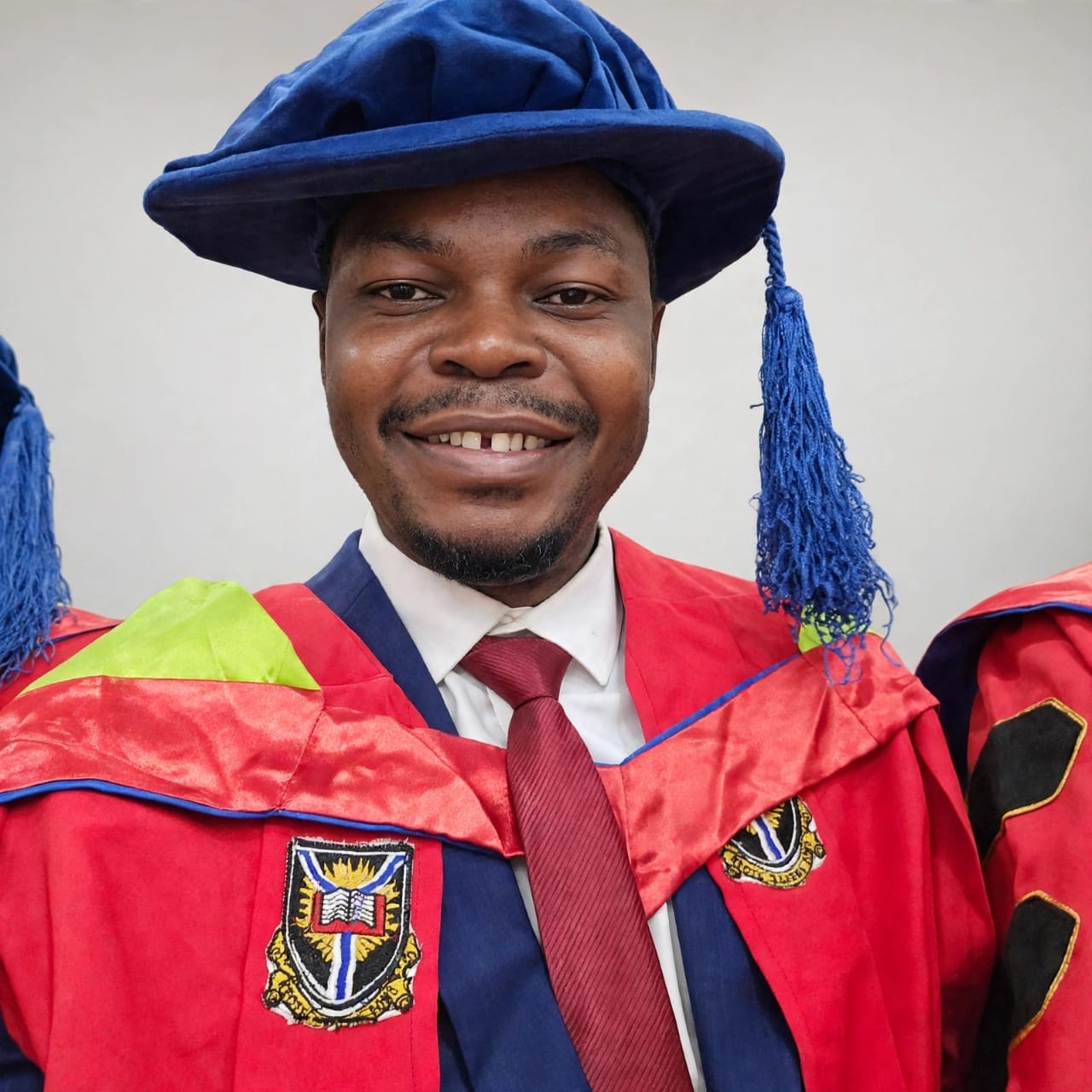
This was the query that drove Dr Joel Abah, a lecturer and interdisciplinary researcher on the Department of History and International Studies, Prince Abubakar Audu University, Anyigba, Kogi State, to undertake a three-year doctoral investigation into humanitarian emergencies in internally displaced individuals (IDP) camps in Benue State.
His findings, drawn from analysis carried out in 5 displacement camps — Ichwa, Naka, Anyinn, Abagana and Daudu-II — expose challenges that transcend the instant penalties of violent battle.
They inform a narrative of households scuffling with insufficient meals, healthcare, shelter and sanitation, communities receiving unequal humanitarian consideration, and displaced individuals whose hopes of rebuilding their lives stay unsure.
For Abah, the expertise modified the best way he understood humanitarian emergencies.

Rather than concentrating solely on what authorities businesses and humanitarian organisations claimed to supply, he needed to grasp how displaced individuals skilled these interventions and whether or not the help mirrored their precise wants.
One of essentially the most troubling discoveries was the unequal distribution of humanitarian consideration.
According to him, displacement camps situated inside or nearer to Makurdi and its surrounding communities usually acquired larger humanitarian visibility than these located in additional distant components of the state.
Insecurity, which incessantly limits the motion of humanitarian organisations, has made entry to a few of these communities troublesome.
However, the consequence is that displaced individuals in distant areas danger struggling twice: first, from the violence that pressured them from their houses, and once more from the problem of accessing help.
The state of affairs raises questions on how humanitarian organisations decide the place to intervene and whether or not geographical accessibility generally influences the distribution of help greater than the precise degree of want.
Abah additionally found that humanitarian help might turn out to be more and more unsure when organisations cut back or discontinue their operations.
He particularly recognized the results of the downscaling of healthcare providers beforehand supplied by Médecins Sans Frontières (MSF) in Ichwa, Daudu-II and Abagana. He additionally highlighted the discount of meals help beforehand supplied by the International Committee of the Red Cross (ICRC), significantly in Abagana and Daudu-II.
Although different organisations subsequently turned concerned in a few of these areas, he noticed that their capability didn’t at all times match the extent and vary of providers beforehand accessible.
For displaced households, this creates one other layer of uncertainty. The presence of a humanitarian organisation doesn’t essentially imply that every one important wants are being met.
“When a humanitarian organisation withdraws from a displacement setting, who assumes responsibility for the services and needs it previously addressed?” he requested.
It is a query he believes authorities and humanitarian organisations should confront earlier than withdrawing from communities the place susceptible populations rely on their interventions.
His analysis additionally challenges the tendency to deal with humanitarian wants as separate issues.
For Abah, offering medical providers with out addressing malnutrition, poor shelter and unsafe water can’t ship significant well being safety.
Food, healthcare, shelter, water, sanitation and hygiene are interconnected. A household struggling to acquire ample meals or entry clear water can’t be anticipated to get pleasure from good well being just because a medical facility is on the market.
The penalties are significantly extreme for households who’ve spent prolonged intervals away from their houses and livelihoods.
Before displacement, many residents relied on farming, livestock-related actions, petty buying and selling and different casual occupations. Conflict disrupted these financial actions, separating households from their farmlands, productive belongings, markets and social networks.
Over time, depleted financial savings, lack of revenue and dependence on exterior help make financial restoration more and more troublesome.
Yet, Abah noticed that displaced persons are not merely ready for reduction supplies. Many have interaction in petty buying and selling, informal labour, small-scale farming and different survival actions to help their households.
Their willpower to outlive, nonetheless, shouldn’t be confused with real financial restoration.
He argues that humanitarian interventions should transcend emergency reduction to incorporate entry to land, agricultural inputs, vocational coaching, credit score amenities and markets.
For him, restoring dignity to displaced individuals additionally means giving them the chance to earn a dwelling and regain management over their future.
A Scholar’s Journey Through Personal Sacrifice
Behind the analysis is a private story of willpower, religion and help.
Abah accomplished his doctoral research in Peace, Security and Humanitarian Studies on the University of Ibadan inside three years, defending his thesis on February 17, 2026.
To the very best of his information, he could be the first individual from Kogi State to realize this distinction within the specific subject on the establishment.
However, the achievement didn’t come with out appreciable sacrifice.
While pursuing his doctorate, he continued his tasks as a lecturer and researcher at Prince Abubakar Audu University. He additionally needed to navigate the calls for of in depth fieldwork, travelling between displacement-affected communities, managing altering safety situations and documenting the experiences of people that had lived by violence and loss.
The monetary calls for have been equally difficult.
He undertook the analysis with out institutional funding, personally navigating the prices related together with his doctoral research and fieldwork.
There have been moments of exhaustion and uncertainty, however he stated his conviction in regards to the significance of the analysis stored him transferring.
His religion additionally performed a central position within the journey.
Abah described the completion of his doctorate as a sworn statement of God’s grace, acknowledging that his achievement was made doable not solely by private willpower but additionally by the kindness and help of people that stood by him.
Among these he specifically recognised was his pal, mentor and brother, Dr Danladi Abah, at the moment on the University of Ghana, whose monetary help and emotional encouragement helped him by troublesome moments.
He additionally reserved particular appreciation for his doctoral supervisor, Professor I. O. Albert, FNAL, Fspsp, whom he described as an instructional father whose mental steering, mentorship and private dedication contributed considerably to his improvement.
His spouse, Lydia O. Joel-Abah, additionally performed an vital position all through the method.
He acknowledged her endurance, understanding, love and sacrifices, noting that doctoral analysis locations appreciable calls for not solely on the researcher but additionally on these closest to them.
For him, the achievement belongs to everybody who contributed to creating the dream doable.
From Research To Real-Life Solutions
Despite the tutorial recognition, Abah insists that the true worth of his analysis will rely on whether or not its findings affect choices and enhance situations for displaced individuals.
He believes authorities should take larger duty for the safety and welfare of internally displaced individuals, stressing that humanitarian organisations are anticipated to enrich the state relatively than change its tasks.
He additionally needs authorities businesses, worldwide humanitarian organisations, non-governmental organisations and civil society teams to enhance coordination and develop extra built-in interventions.
One of his main suggestions is that displaced populations needs to be actively concerned in figuring out the priorities of humanitarian programmes.
In his view, organisations should not assume that their institutional mandates routinely replicate the expectations of the individuals they serve.
He additional advocates accountable exit methods for humanitarian organisations, guaranteeing that important providers don’t collapse when an organisation reduces or ends its intervention.
Other suggestions embrace stronger livelihood restoration programmes, improved humanitarian entry to distant communities, higher coordination amongst intervention businesses, elevated consideration to schooling and social safety, and sustained efforts to handle the insecurity answerable for displacement.
Ultimately, he believes the aim needs to be to create situations that permit displaced individuals to return voluntarily, safely and with dignity to their ancestral communities. Where return just isn’t doable, native integration or resettlement needs to be thought of according to their circumstances and preferences.
Abah intends to proceed participating authorities establishments, humanitarian organisations and improvement companions by analysis publications, coverage briefs, public lectures and stakeholder discussions.
His subsequent analysis pursuits embrace humanitarian governance, digital participation, on a regular basis peacebuilding, citizenship and the contributions of displaced communities to their very own safety.
For a scholar whose doctoral analysis started with questions in regards to the effectiveness of humanitarian interventions, the message is obvious: the success of humanitarian help shouldn’t be measured solely by the amount of reduction supplies distributed or the variety of programmes carried out.
It also needs to be measured by whether or not displaced households can entry primary requirements, rebuild their livelihoods and regain the dignity and safety that displacement took away from them.
And maybe crucial query his analysis leaves behind is one which authorities and humanitarian organisations can’t afford to disregard: when individuals lose their houses, livelihoods and sense of belonging, are the interventions designed for them really serving to them rebuild their lives?









2027: Why we endorsed Peter Obi – Coalition of Atiku's help teams [VIDEO]

Army honours 14 retired generals in Bauchi

Troops interact six suspected bandits in Kogi forests

Influencer Hauwa shares encounter with police officer

Troops rescue kidnapped lady in Plateau after stress forces abductors to desert her

Troops stop potential abduction in Kaduna school

Jim Iyke lastly reveals off his spouse after nearly 5 years of being collectively (video)